




At LEJAN constantly LEJAN this question: Does my child have flat feet? Should I be concerned?
First things first: breathe. In most cases, flat feet in children are common and, above all, physiological (part of development).
When we talk about flat feet in children, we are referring to the fact that the inner arch (the small bridge of the foot) appears low or is almost invisible when the child is standing. In addition, the heel often tends to turn outwards slightly (flatfoot), which can make the ankle appear to be tucked in from behind. This combination is the most common in childhood.
And why does this happen so often? Because children's feet are not fully developed at birth. They have:
-
More elasticity (looser ligaments).
-
More adipose tissue in the sole (which visually covers the arch at an early age).
-
A neuromotor system that is still learning to stabilize.
So, the big question isn't "Does it look flat?" but rather, how does that foot function? If the child runs, jumps, plays, has no pain, and does not tire excessively, we can usually rest assured.

Is this normal at his age? How does the arch of the foot develop in children?
The arch develops gradually, and yes, during the first years of life it is very common for the foot to appear flat. It is to be expected that, with growth and movement (play, strength, balance), the arch will gradually become more defined. Therefore, rather than obsessing over an exact age, we are interested in observing the trend: that the arch appears over time and that the foot is functional (without pain, stiffness, or limitations when moving).
In other words: you cannot judge a 2–3-year-old's foot by the standard of an adult.
However, there is an important nuance that also appears in the literature: there is a wide range of normality, and some people can maintain flexible, functional, pain-free flat feet throughout their lives.
That is why we insist on this idea: LEJAN:
-
If the child is asymptomatic, the foot is flexible and there is no underlying condition , it is often best to observe and accompany it with habits that favor development.
And what habits? Movement, play, varied surfaces... and footwear that does not interfere with the natural function of the foot (we will go into more detail later).

Flexible vs. rigid flat feet: the difference that changes everything
Here's the plot twist that separates the good stuff from the let's take a closer look stuff. In pediatrics, there are two main groups:
-
Flexible flat feet: when we say flexible, we are referring to function. That is, the muscle groups involved in the behavior of the arch are working well and the foot has the ability to adapt. In general, the more flexible (more functional) a flat foot is, the better the prognosis. Therefore, when we ask a child to stand on tiptoes, we are not only looking for an arch; the most important thing is to check that the heel changes its alignment and goes from valgus to varus, a sign that the foot is reorganizing itself. And a key nuance: most physiological flat feet are flexible, but a flexible foot does not automatically mean that it is always normal. There are also pathological flat feet that can still be flexible, so we always assess it as a whole: if there is pain, fatigue, limitation, asymmetries, and how it evolves over time.
-
Rigid flatfoot: there is less mobility, the foot does not change when standing on tiptoes, and it may be associated with abnormal bone connections (e.g., tarsal coalitions). This type usually requires specific assessment and, in some cases, imaging tests.
Why do we say that everything changes? Because flexible conditions are usually managed with a conservative approach (and often without treatment), while rigid conditions, especially if they cause pain or limitation, are not treated in the same way.
How to tell if your child's flat feet are "working well" (2 simple tests)
We love that families have tools to understand what they see. These two tests are widely used as a reference and are very easy to do at home. Important: they are for guidance only and are not a substitute for consulting a professional. If there is pain, stiffness, or marked asymmetry, it is best to consult directly.
Jack test: if the arch appears when you lift your thumb
With the child standing, gently lift his big toe (dorsiflexion of the hallux).
What do we expect in a flexible foot? That the arch the inner arch to appear and the foot to organize itself better. This reaction is associated with the functioning of the plantar fascia mechanism (winch effect).
LEJAN interpretation LEJAN simple):
-
If an arc appears → it usually indicates flexibility and a better functional prognosis.
-
If nothing appears, or there is discomfort/stiffness → it warrants a more thorough evaluation.

Standing on tiptoes: what the heel and arch should do
Ask your little one to stand on tiptoes on tiptoes. On a flat foot flexible, when standing on tiptoes normally:
-
The arch rises (becomes more defined)
-
And the heel tends to correct itself (it goes from valgus to varus).
LEJAN interpretation:
-
If your foot improves when you stand on tiptoes→ it is usually flexible.
-
Yes it does not change (and especially if there is pain or stiffness) → be careful, it may require further investigation.

Warning signs: when to seek medical attention (pain, stiffness, asymmetry)
Let's get straight to the point. Check if any of these points apply:
-
Persistent pain Persistent pain (feet, ankles, legs) or pain that appears during sports/activity and recurs.
-
Rigidity: the foot does not change during tests (tiptoe/Jack) or appears locked.
-
Asymmetries: one foot very different from the other.
-
Functional limitation: gets overly tired, avoids running/playing, or experiences marked fatigue.
-
Progressive deterioration (not due to a day of fatigue, but a sustained trend).
At LEJAN , we summarize LEJAN as follows: if it bothers you, limits you, or isn't flexible, it's best to have it evaluated by a professional.
Causes and factors influencing flat feet in children
Flat feet in children usually have a multifactorial origin multifactorial. Clinical references highlight:
-
Genetics/heredity.
-
Hyperlaxity (very flexible children).
-
Obesity (greater load on structures).
-
Neuromuscular disorders or connective tissue disorders in some cases.
-
Inappropriate footwear and/or low physical activity (as environmental factors that may influence).
If the goal is for the foot to develop with natural stimulation, we want the foot to work and receive information from the ground (proprioception), without the footwear restricting it. In our Barefoot Bonito philosophy, Barefoot Bonito functional anatomy + aesthetics, but the priority remains function.
Treatment of flat feet in children: observation, exercises, and insoles (when appropriate)
This is where the internet is divided. We approach it with a very clear compass: symptoms and functionality.
-
In most cases of asymptomatic flexible flatfoot, management is usually observation and follow-up, as it tends to improve with growth.
-
If there are symptoms (pain, fatigue, limitation), the first thing to do is to thoroughly analyze the case and, from there, begin with conservative measures: such as exercises, education, and, in some cases, insoles to alleviate symptoms (with the important caveat that they can help with symptoms, but do not guarantee a change in structure or evolution).
What we usually recommend as a basis (provided there are no alarms):
-
More active play (running, jumping, climbing).
-
Walk barefoot (safely) and on varied surfaces; the COPCLM even suggests natural terrain and simple exercises such as tiptoeing.
-
Exercises disguised as play: balancing, tiptoeing, walking like animals, etc.
When does it make sense to evaluate templates?
-
When a professional prescribes it after examination (not simply because the arch is low).
Shoes for flat feet in children: how to choose footwear that won't make it worse
At LEJAN , we approach LEJAN this way: the purpose of footwear is not to create an arch, but not interfere the natural development of the foot and encourage the foot to work. A flexible flat foot (which is the most common) improves with movement, stimulation, and progressive strength, which is why the ideal footwear is that which accompanies, not corrects.
What we do often see is that some shoes, due to their construction, can make the foot work less efficiently (and cause the child to tire more easily), even if the foot does not have a serious problem. What do we look for?
-
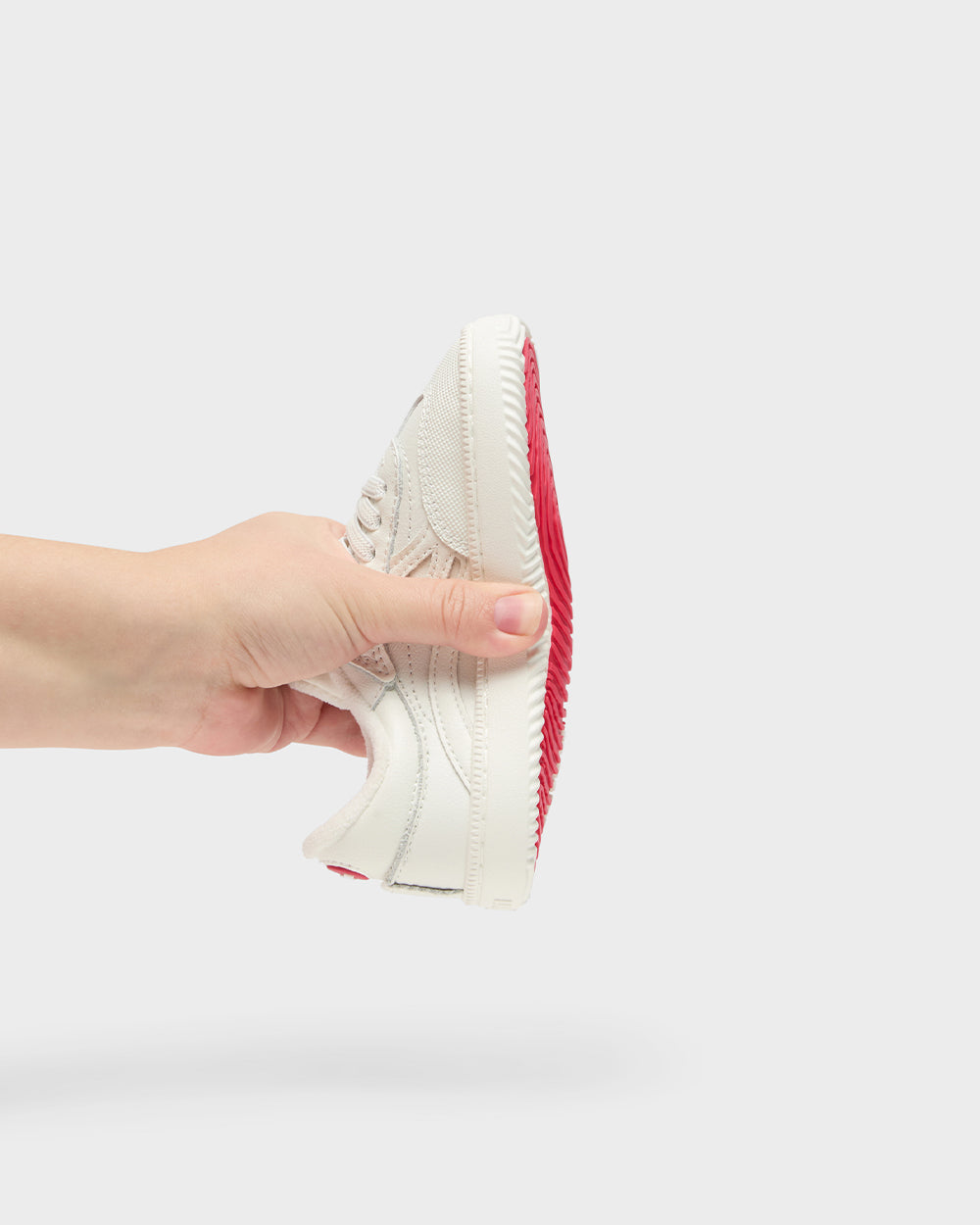
Excessive rigidity: when the sole does not flex, the foot loses information about the ground and disconnects from proprioception. This is very important in children because they are learning to stabilize themselves.
-
Narrow toe box: if your toes are cramped, your foot loses its base of support. And without a stable base, the arch and ankle control are more difficult.
-
Drop (higher heel): raises the heel and changes how weight is distributed. In some children, this can increase the tendency to "collapse" inward, because the body seeks stability however it can.
-
Shoe weight: It may seem silly, but a heavy shoe on a small child is like carrying a backpack on their feet. The lighter and more flexible (without going overboard), the more natural the gait tends to be.
And a very practical tip for buying: we are not looking for a shoe for flat feet, we're looking for a shoe that allows them to move well (without rubbing, extra clumsiness, or strange fatigue). If your little one moves comfortably and actively, you're usually making the right choice.

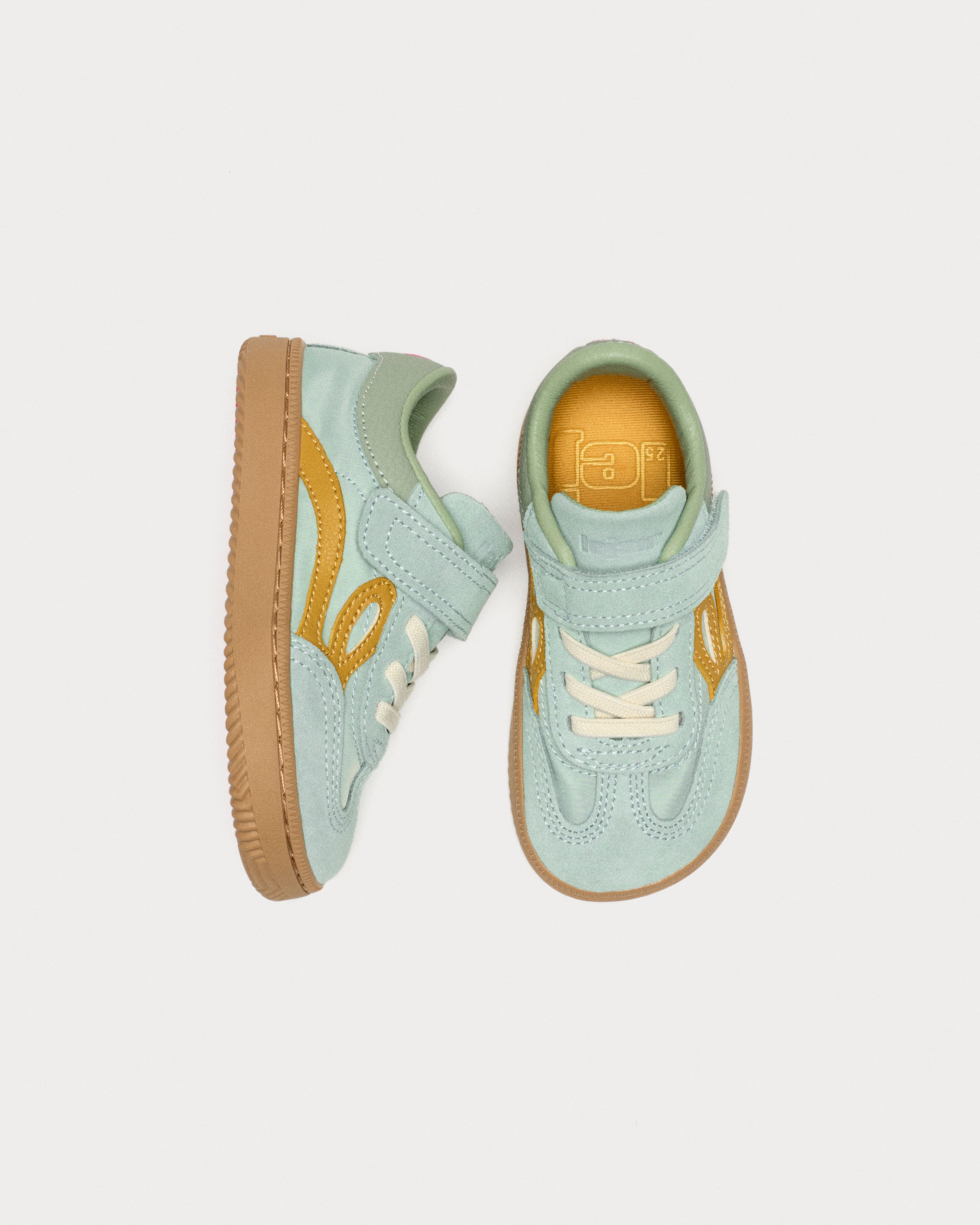
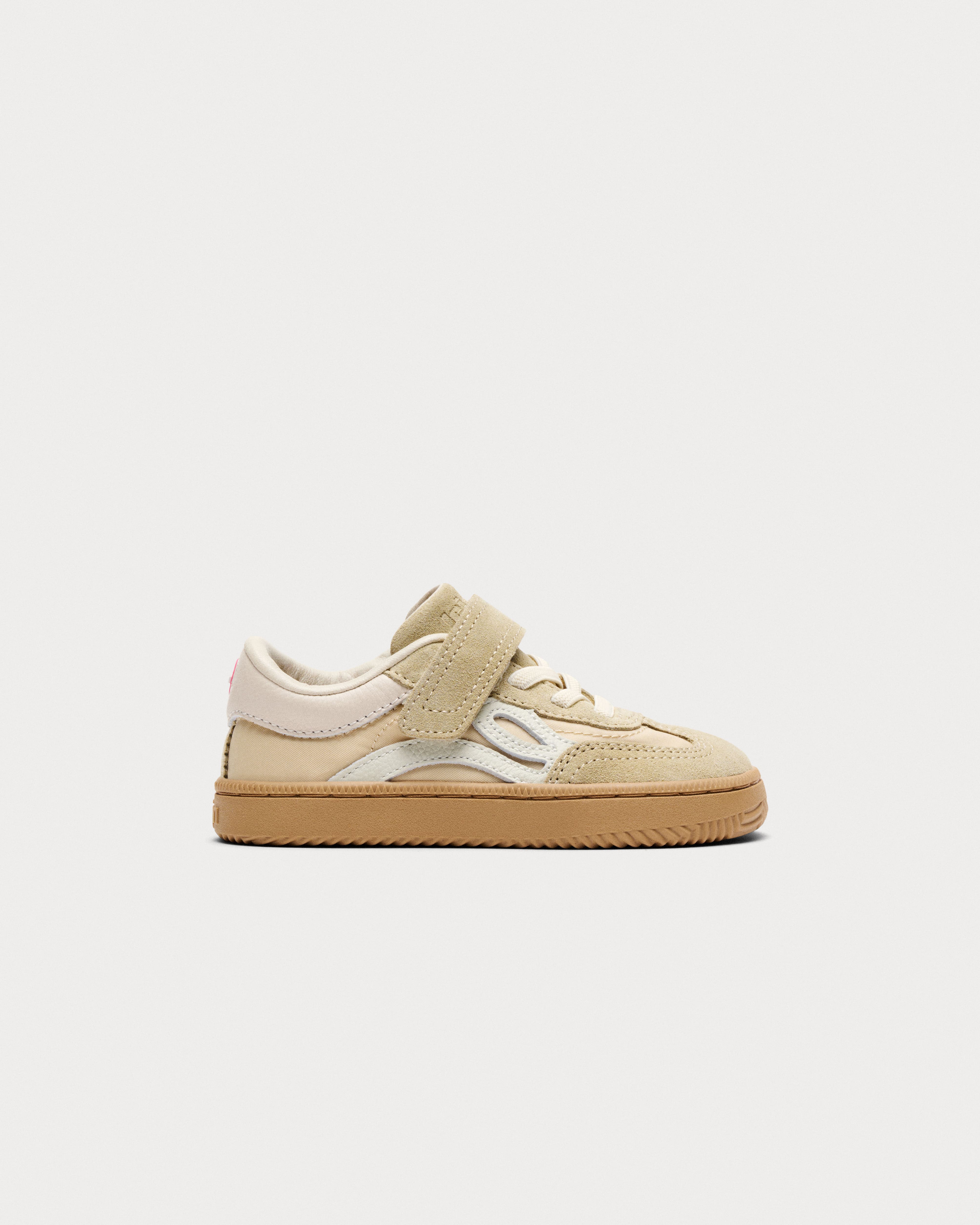
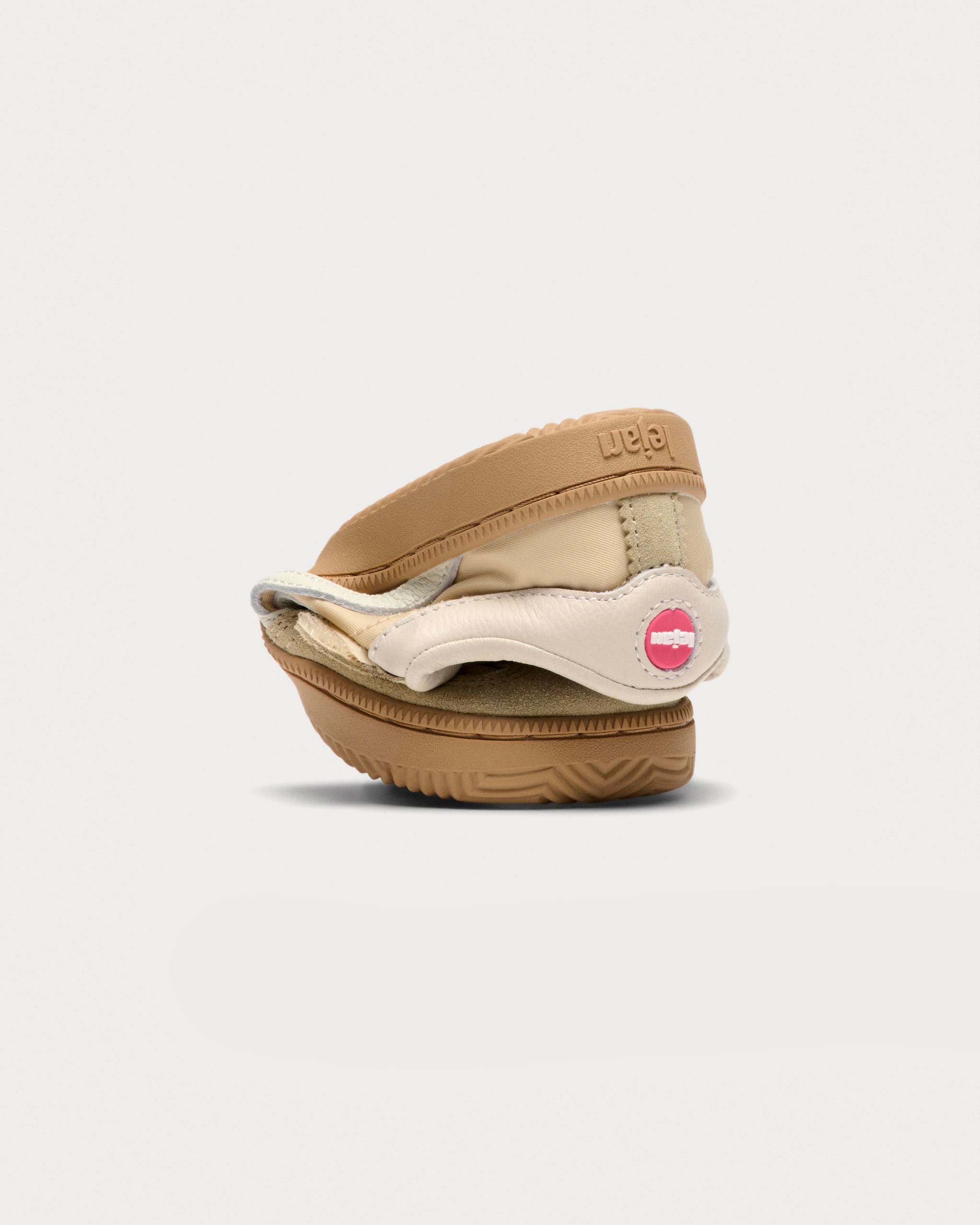
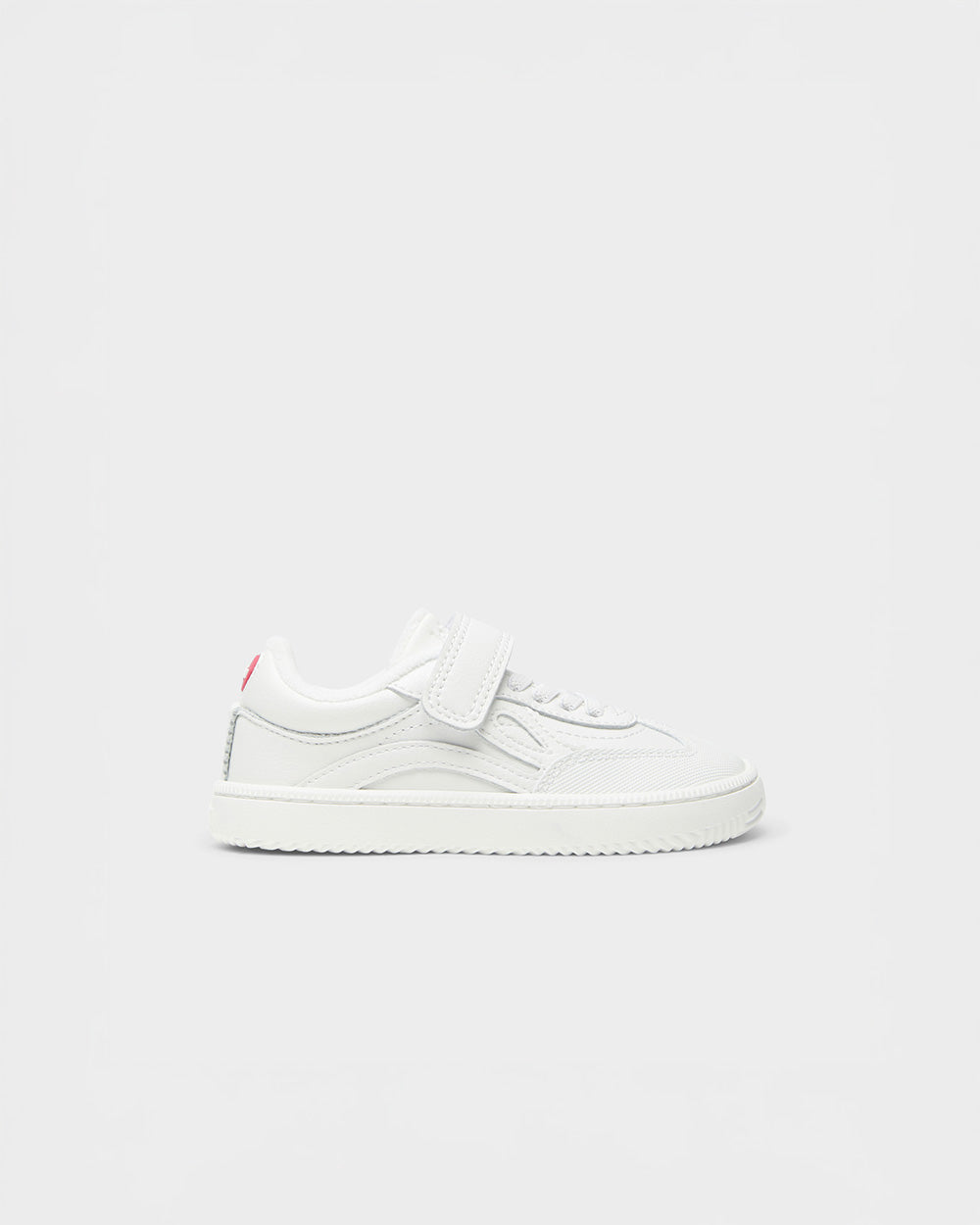
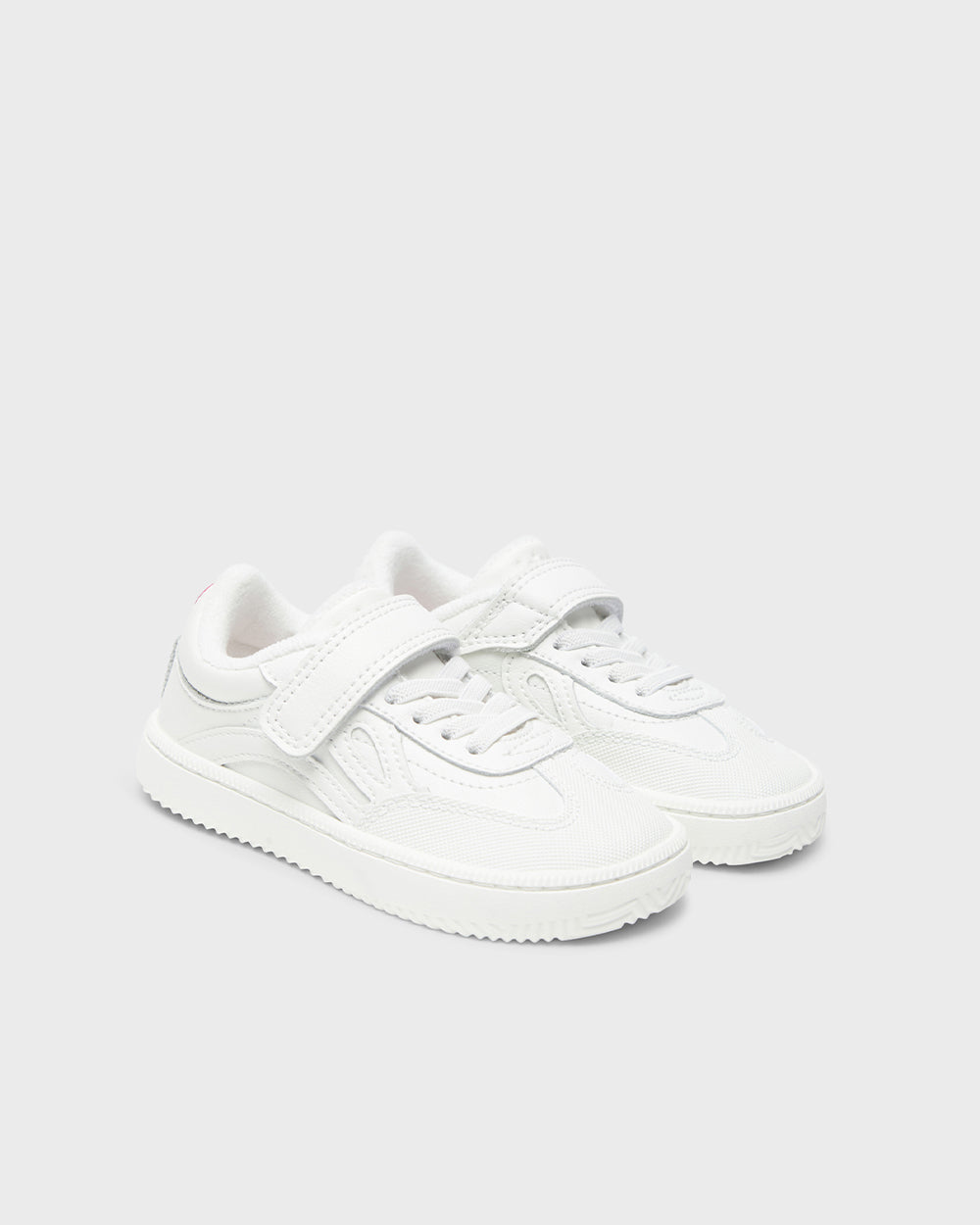
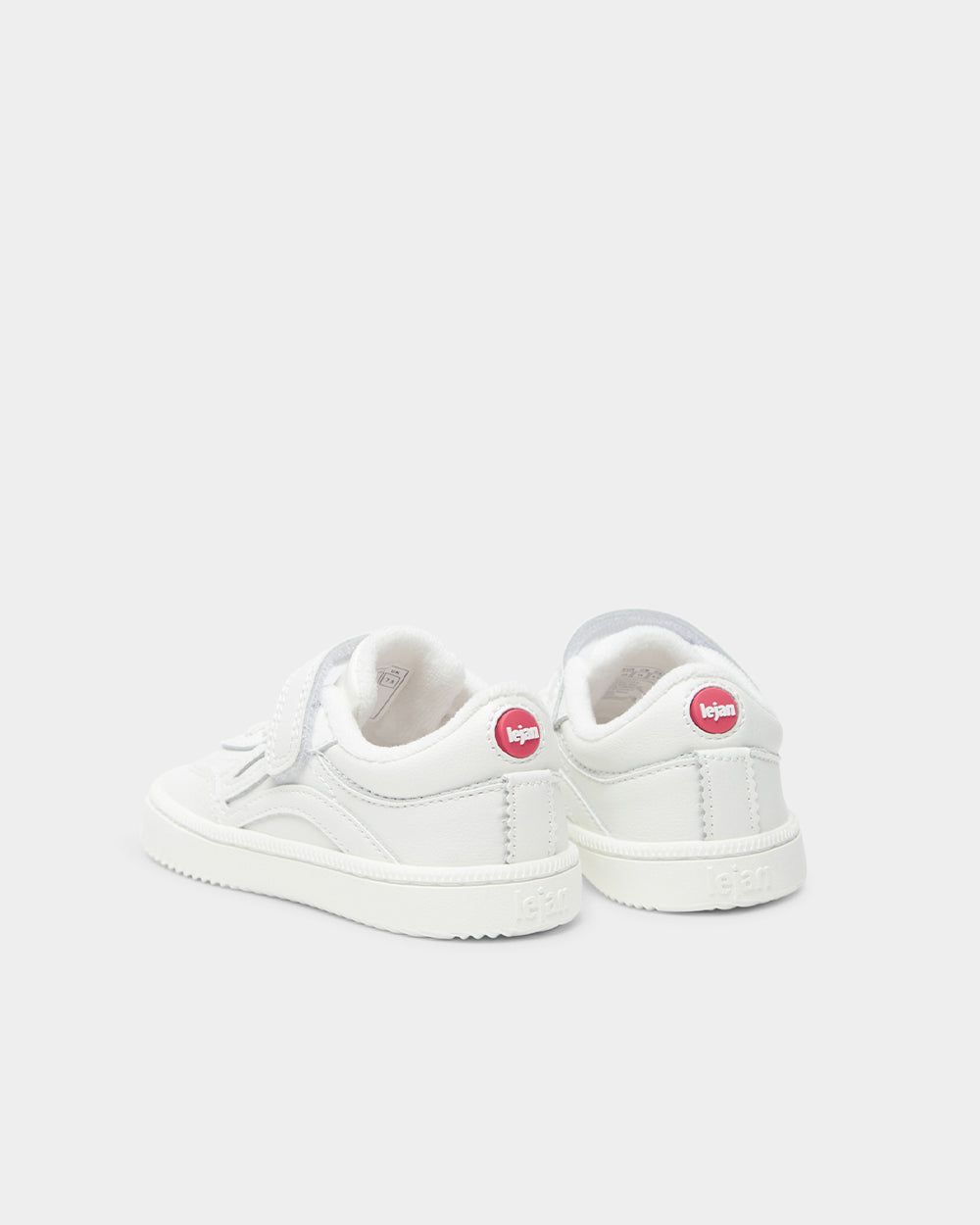
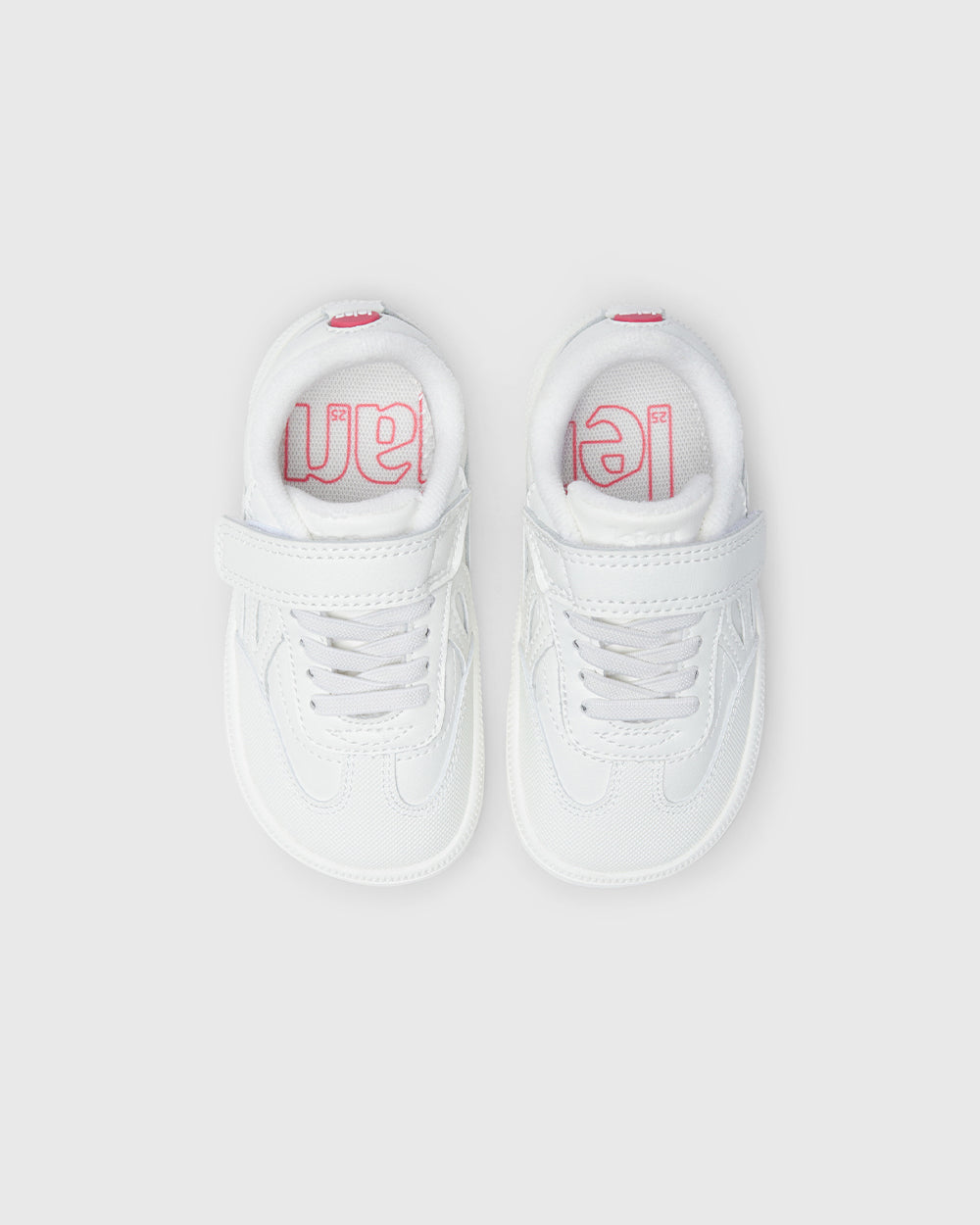
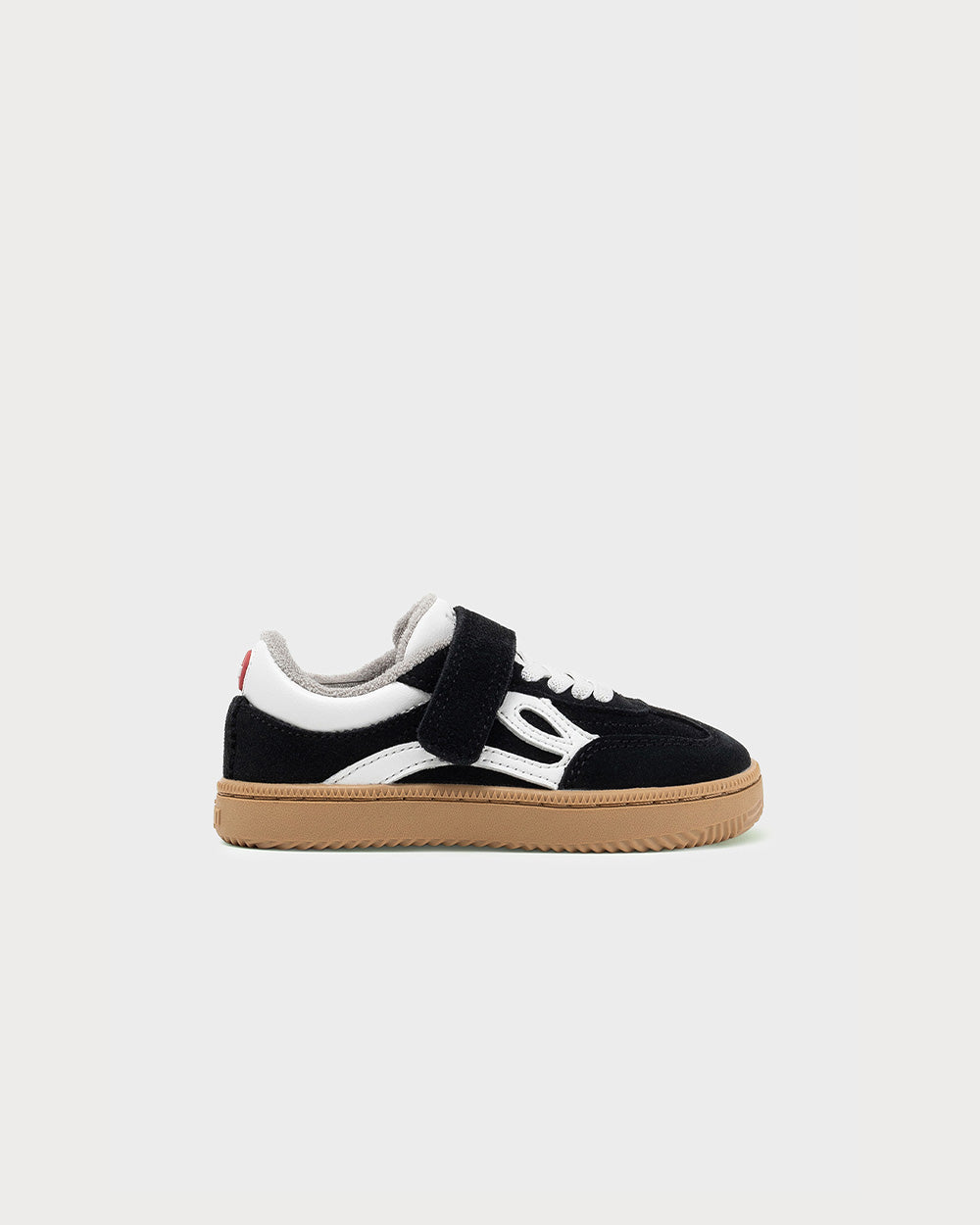
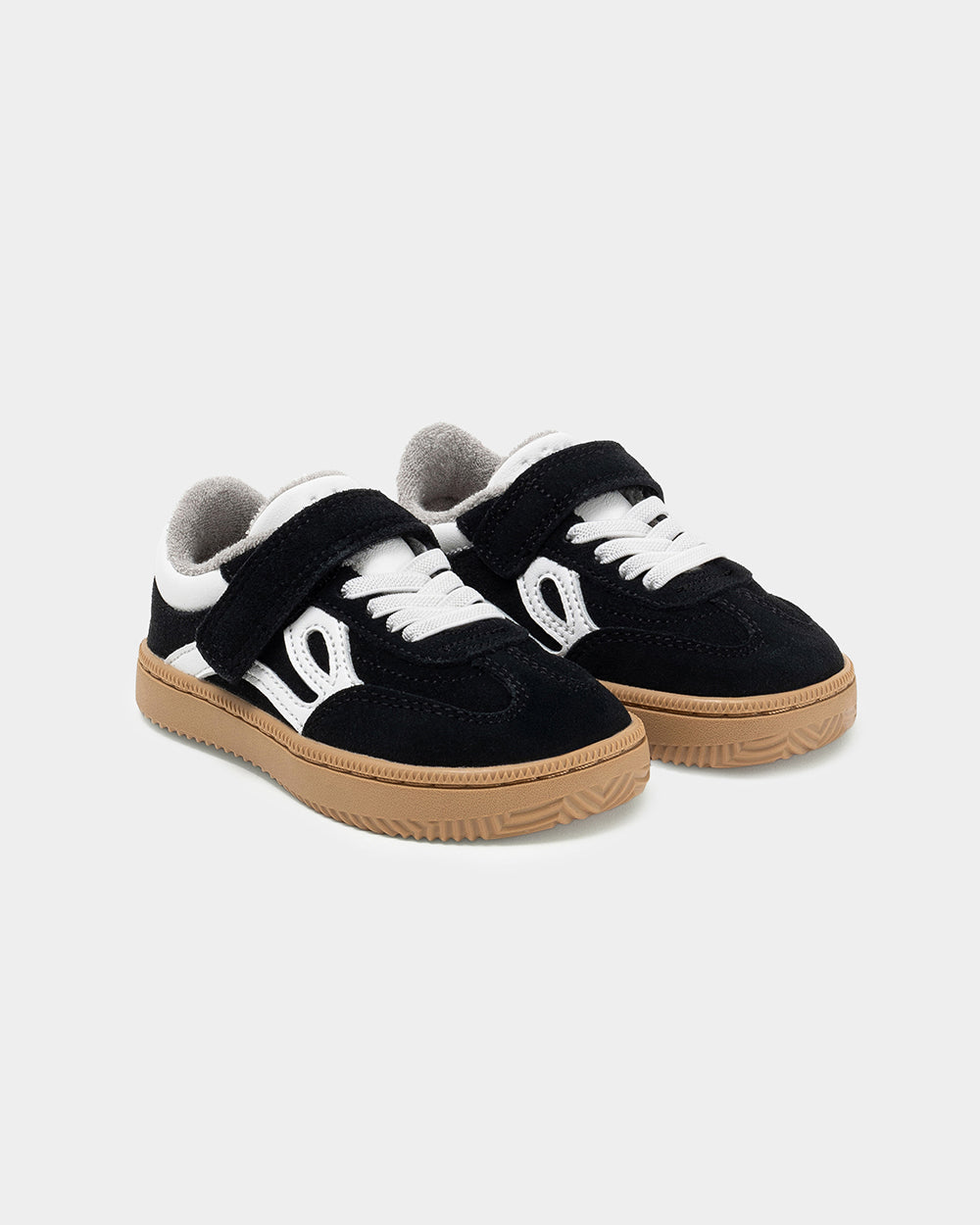
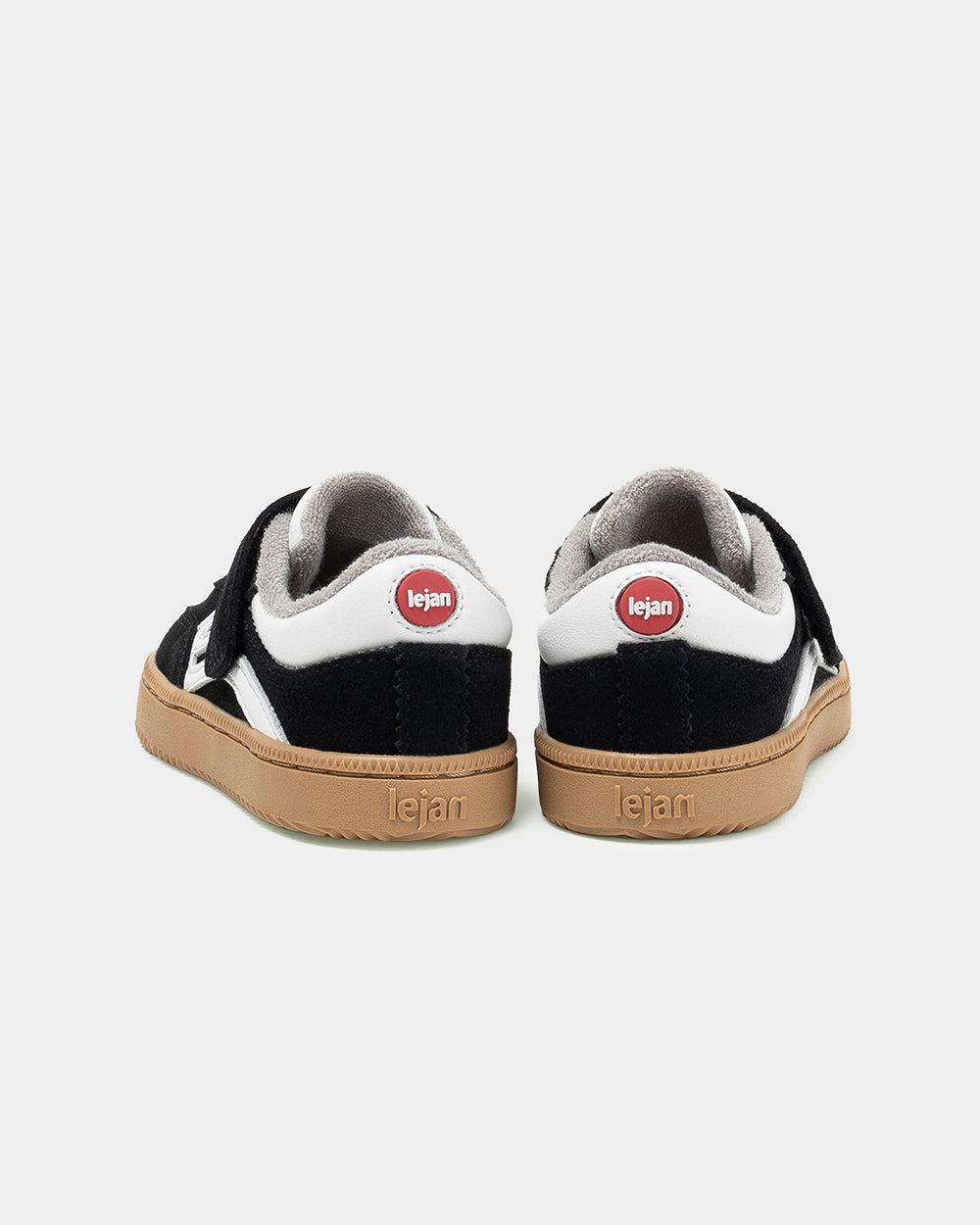
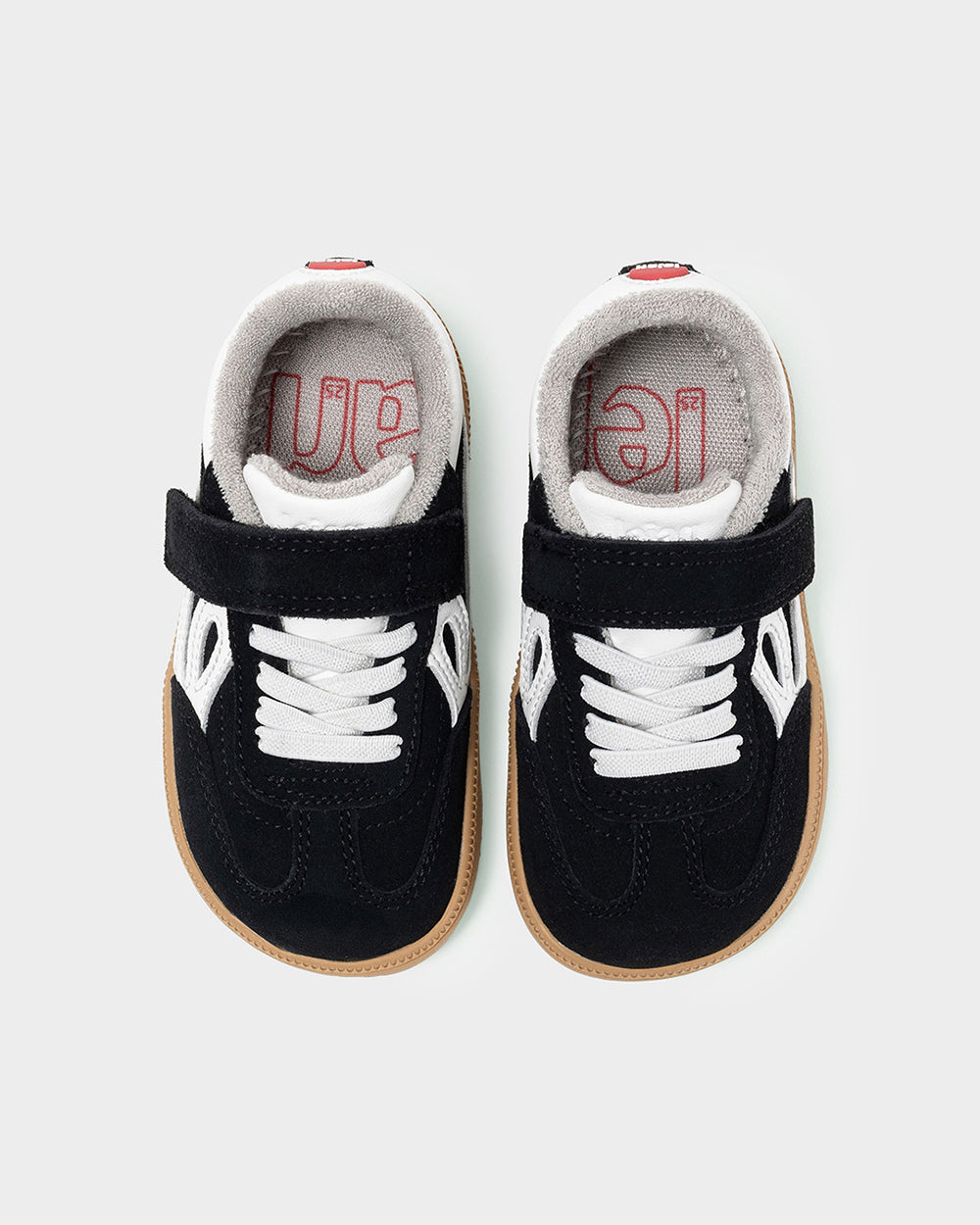
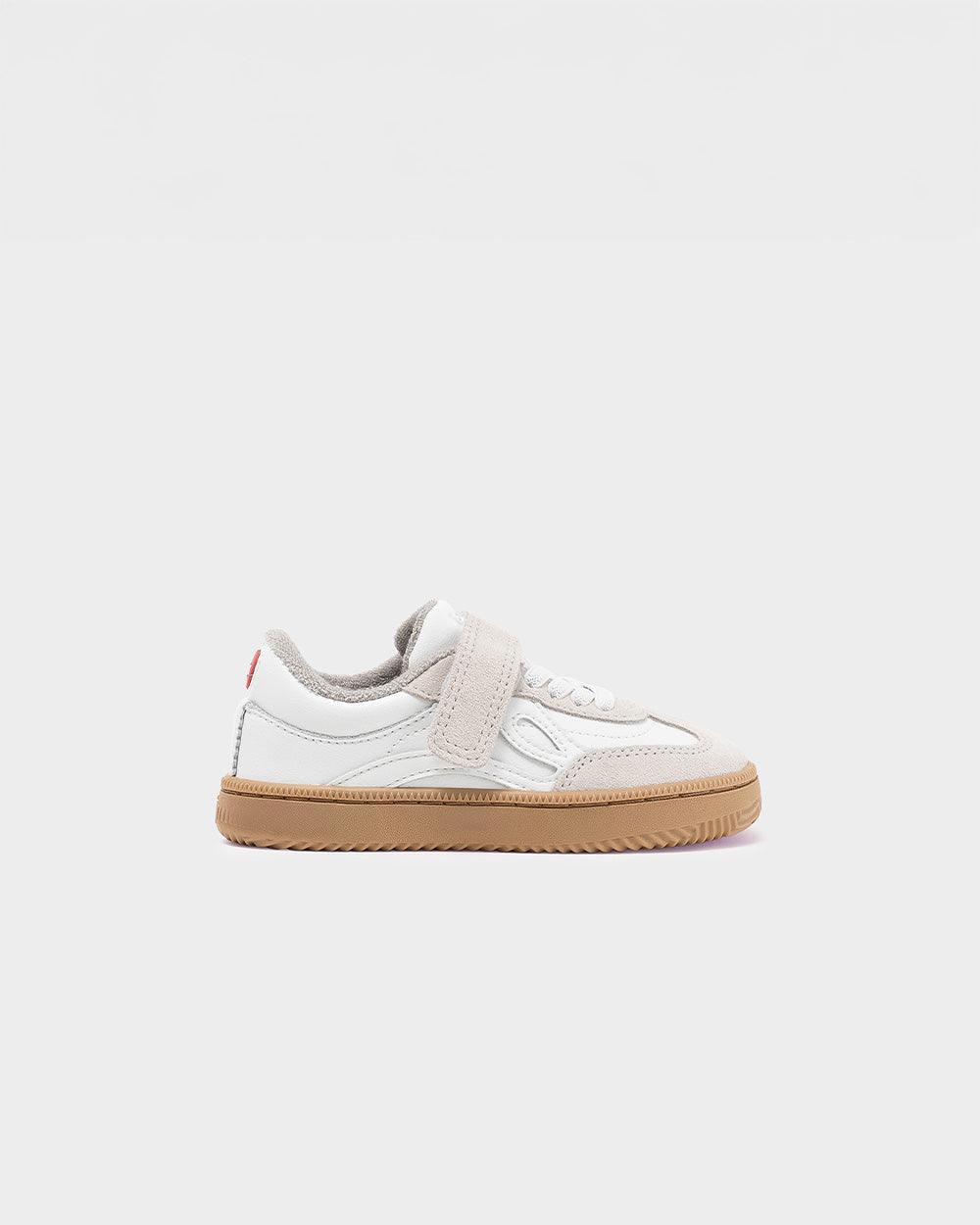
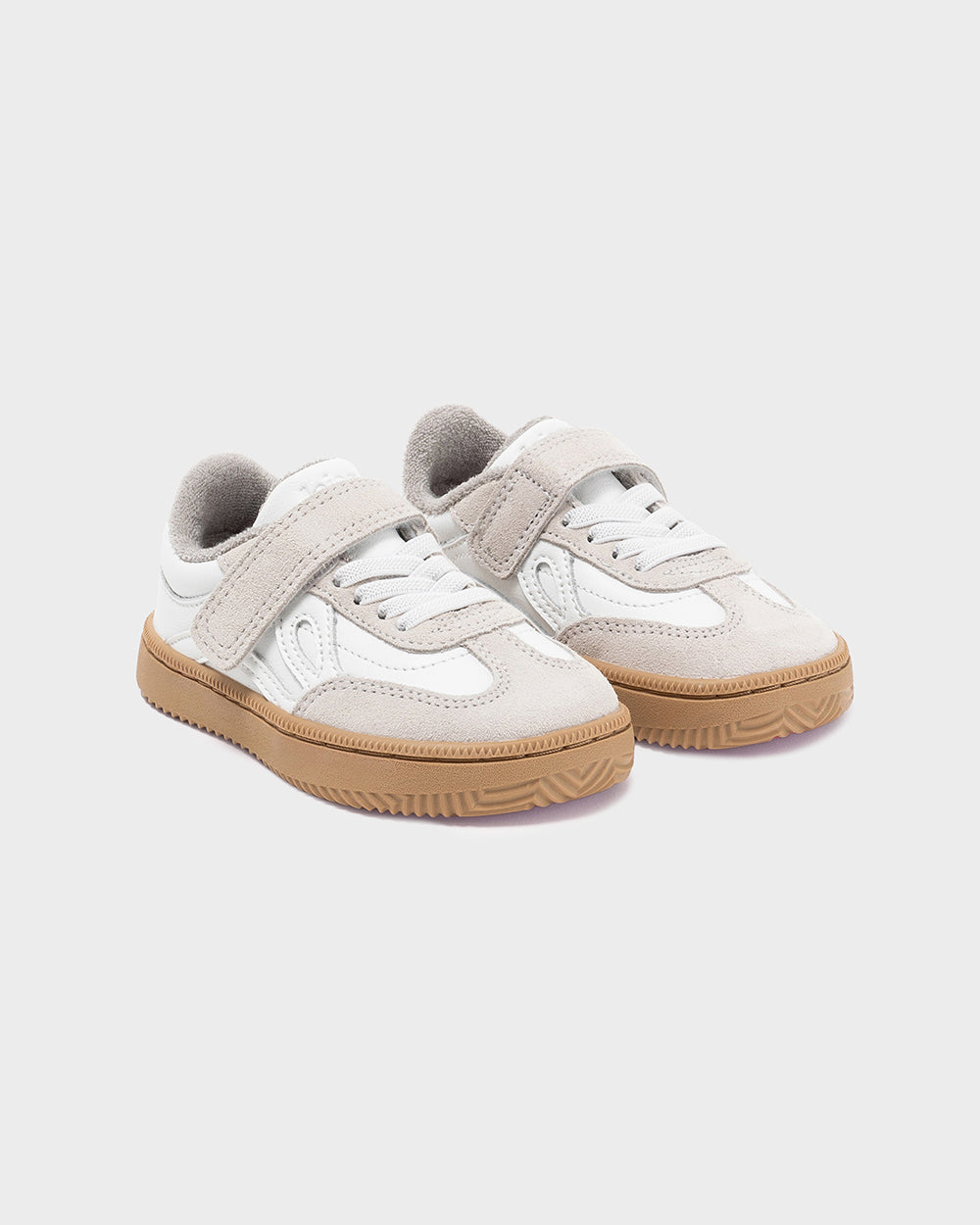
Lejan checklist: flexible sole, zero drop, Fit , and snug fit
This is our basic checklist (what we stand for as a brand):
-
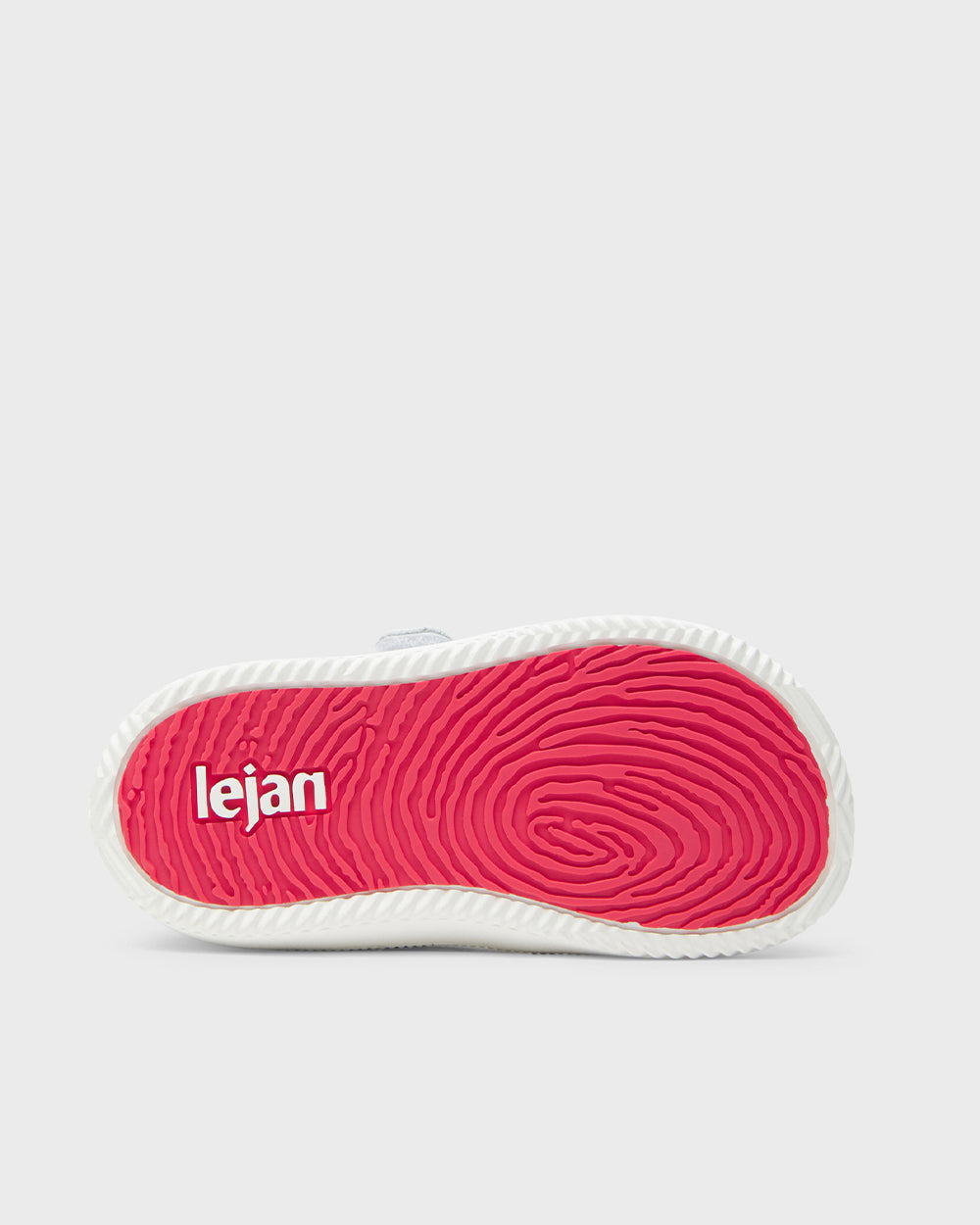
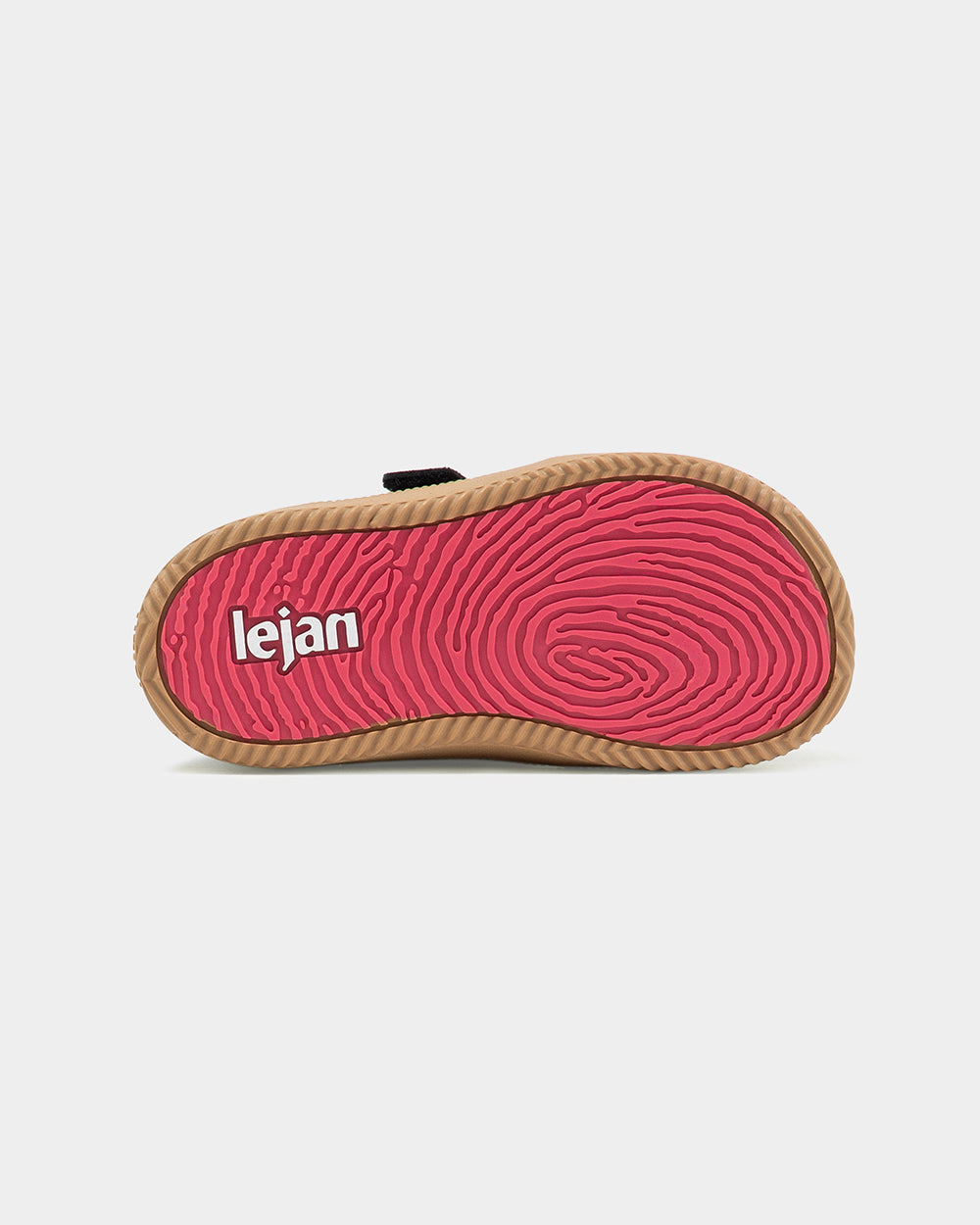
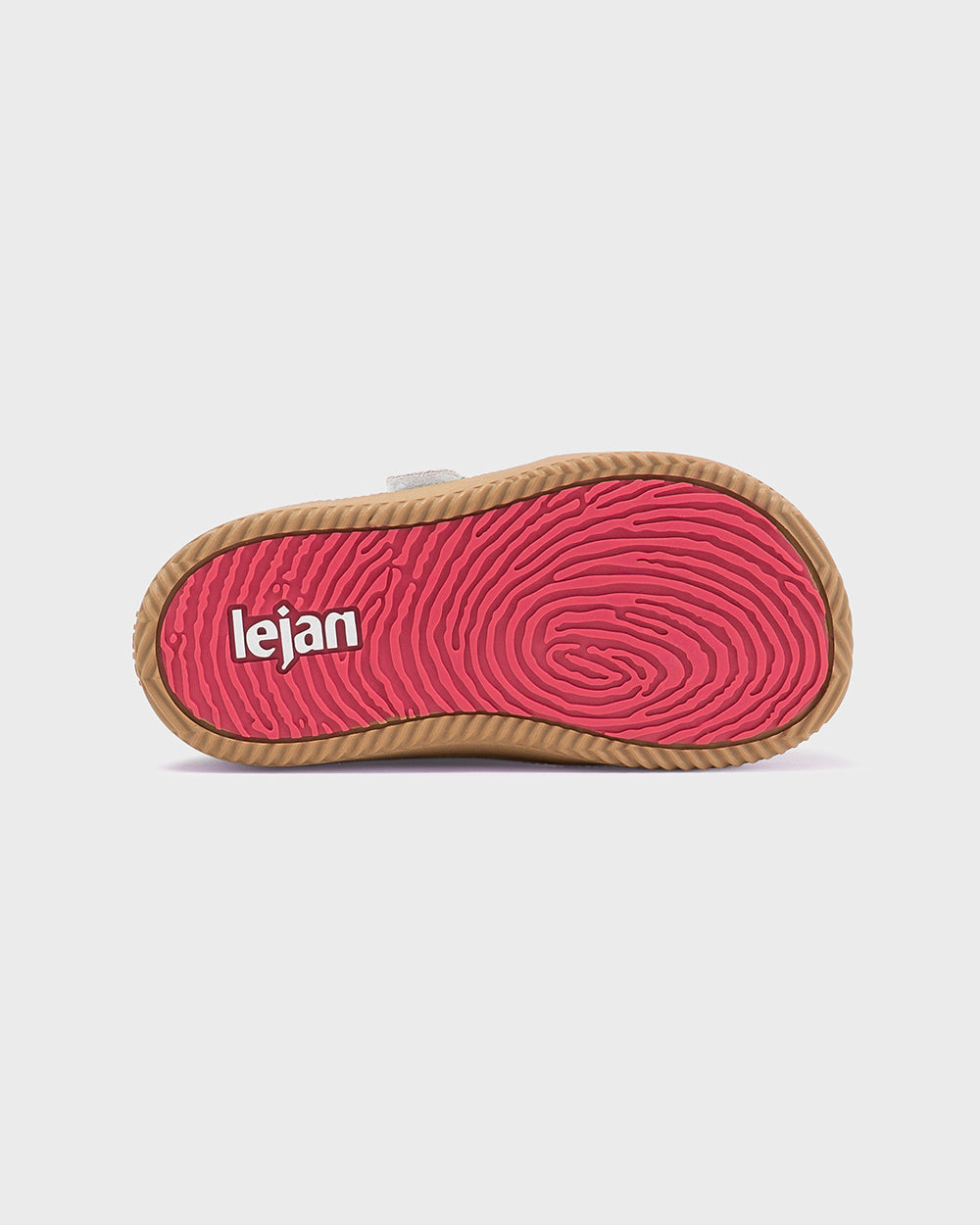
Flexible sole (the Lejancitosgesture Lejancitosas an idea of maximum flexion and transmission of information from the ground).
-
Real drop 0 (no heel-toe difference) so as not to artificially change loads.
-
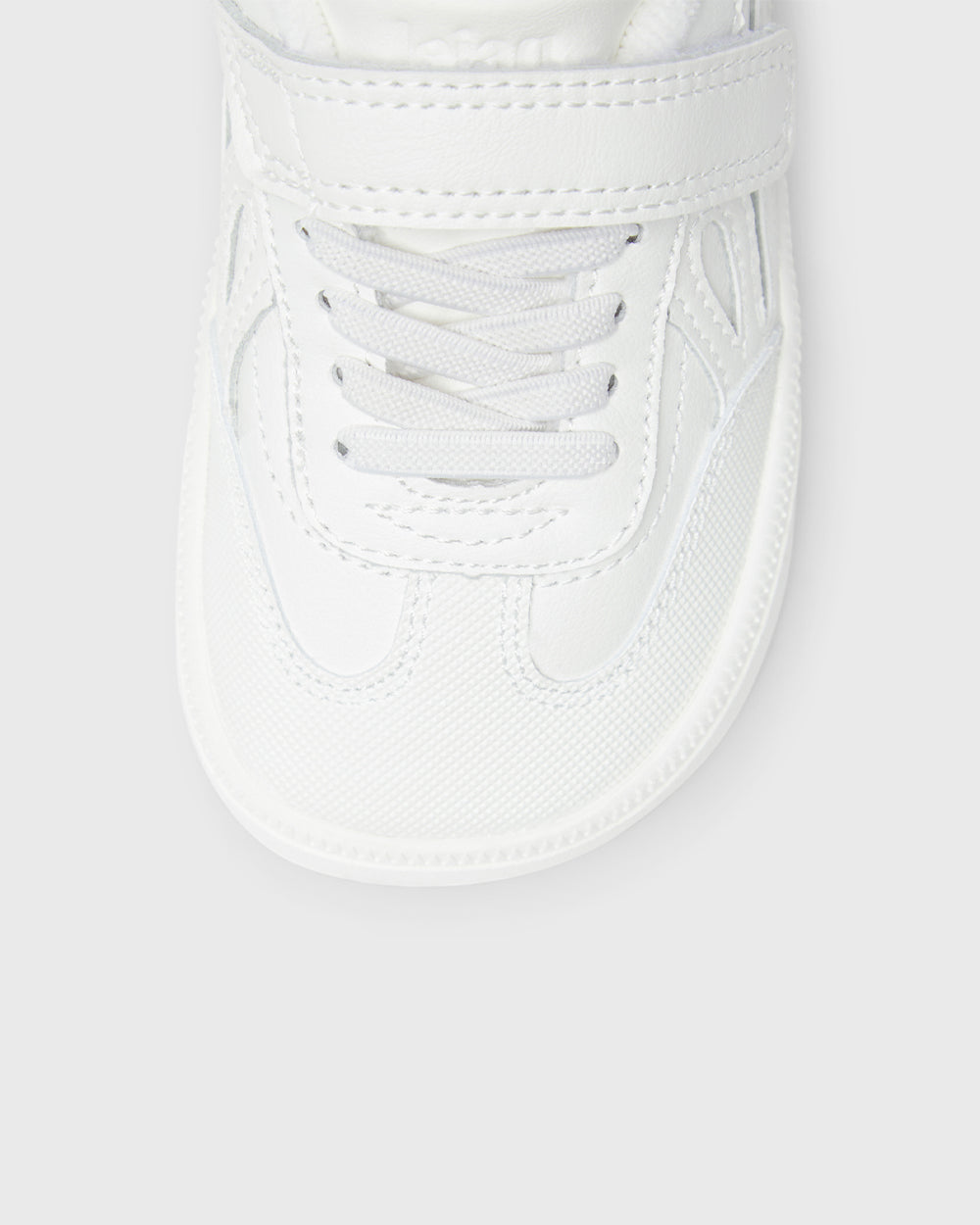
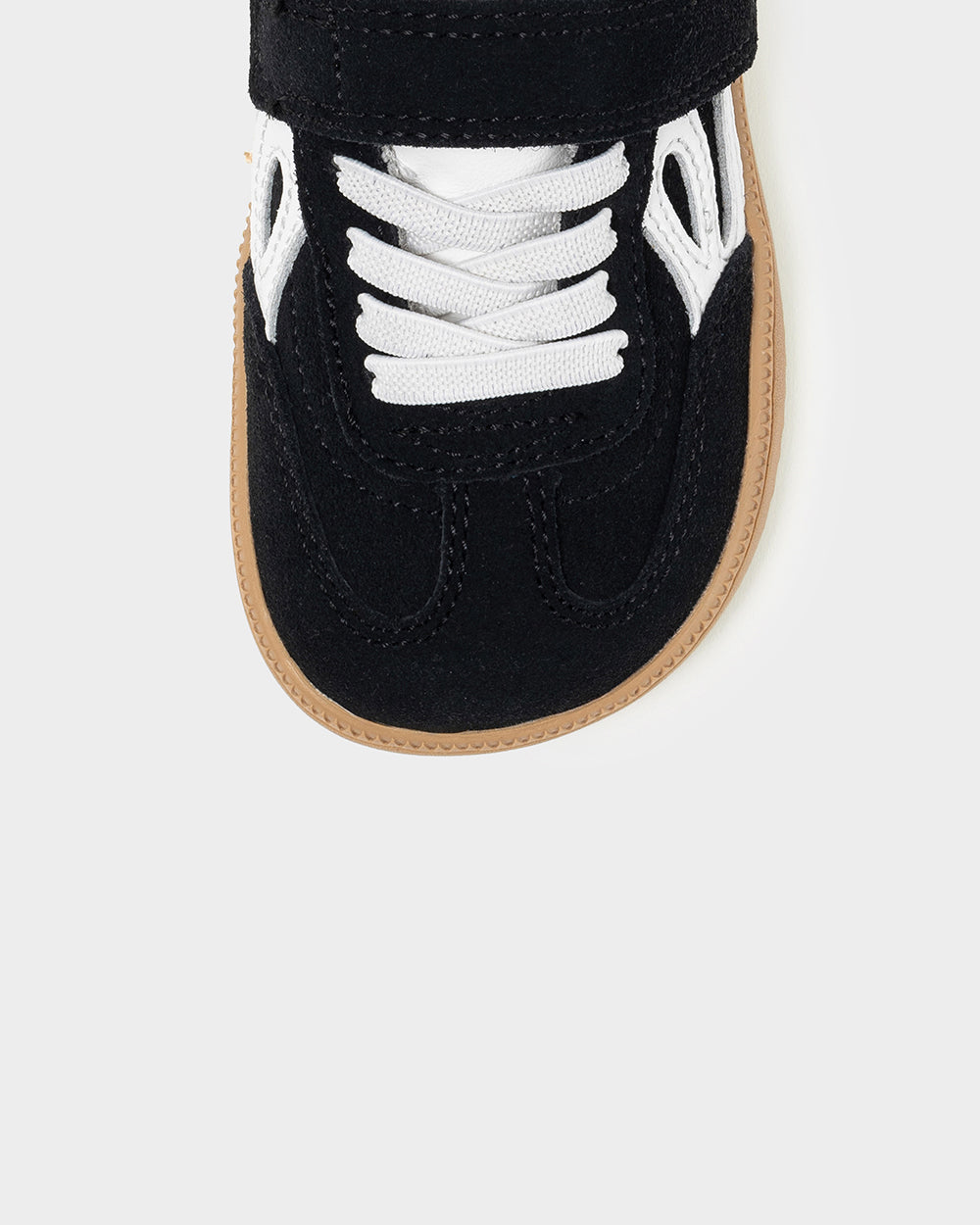
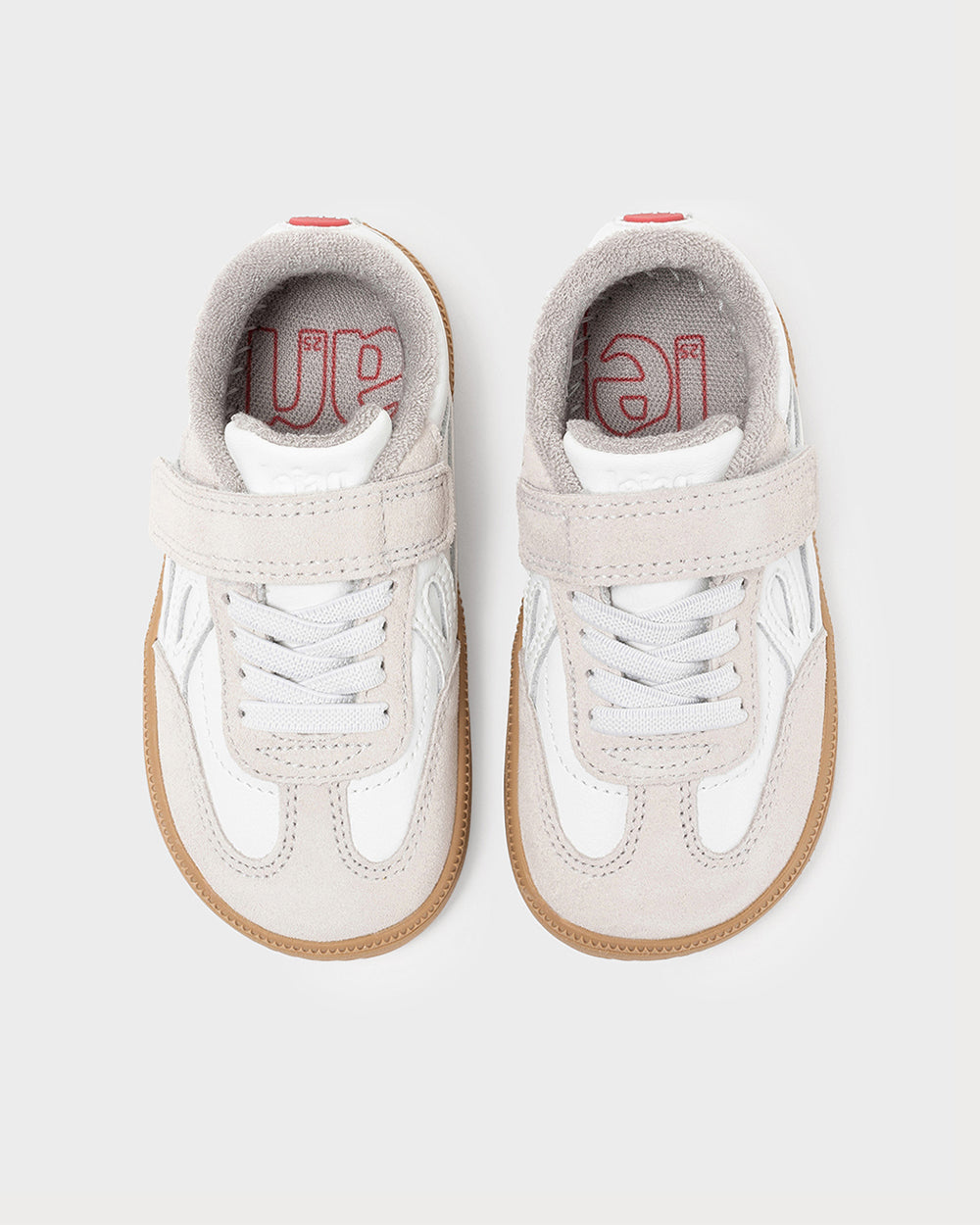
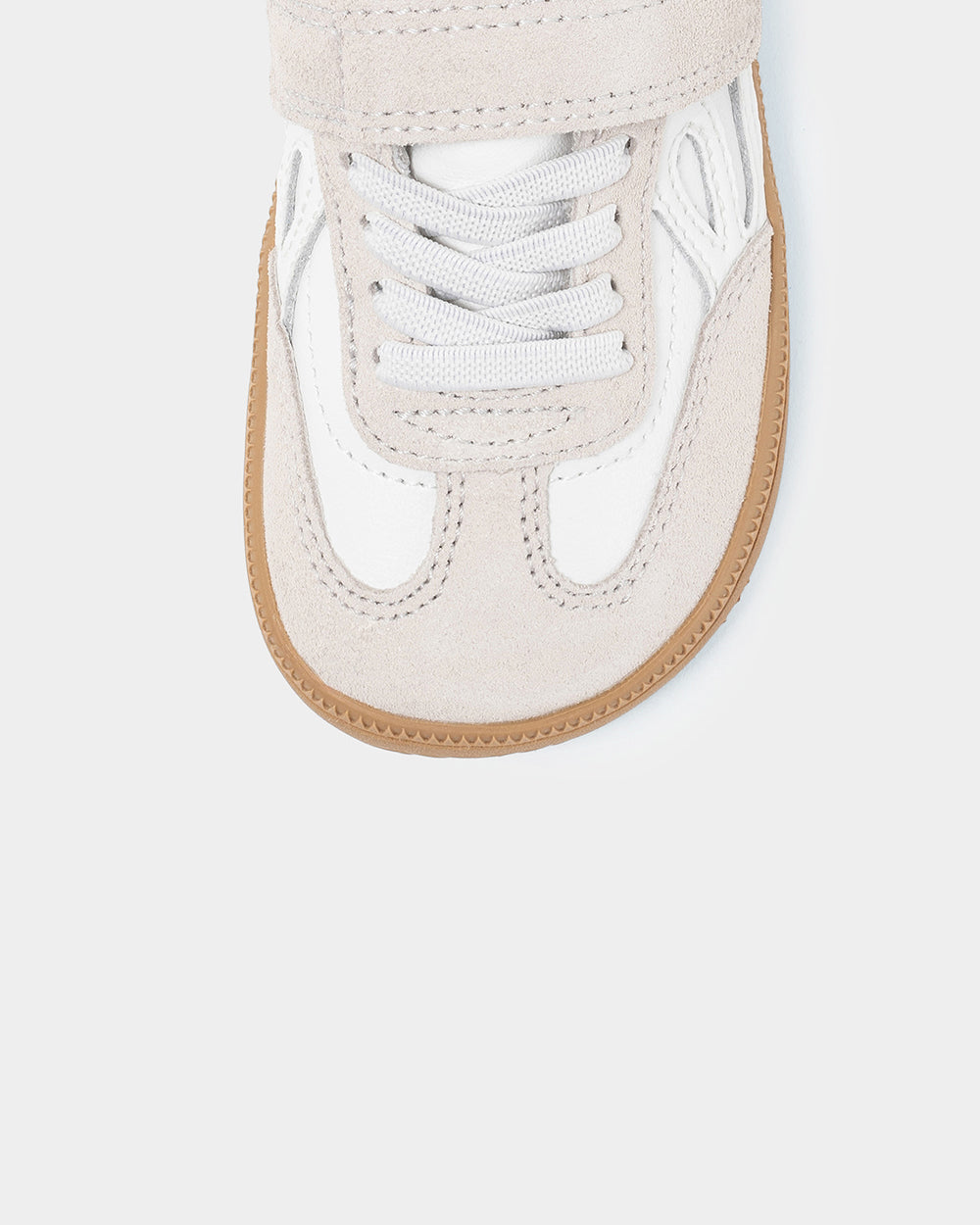
Fit / anatomical toe box so that the toes (especially the big toe) can work in alignment and with space.
-
Firm fit: if the fastening does not adjust properly, the foot will move around inside and what you see on the outside will be distorted.
Extra (very practical): measure carefully. At LEJAN a margin of approximately 1 cm between the longest toe and the end of the insole as a guide for adjustment.
FAQS
1) Does flat feet in children "heal" on its own?
In many children, especially if the foot is flexible, flexible and there is no pain, the arch gradually develops with growth and movement. Rather than thinking about a "cure," we focus on the tendency and function: that the child moves well, without discomfort or limitations.
2) Can flat feet in children cause pain in the legs or knees?
It can occur in some cases, especially if there is fatigue, overload, or the child is very active and the foot is not coping well with the strain. If there is repeated pain (feet, ankles, legs, or knees), it is a good idea to consult to assess the situation as a whole.
3) What if you only have one flat foot and the other is not?
If there is a clear asymmetry (one foot very different from the other), we do not simply dismiss it as "it will go away." It does not automatically mean something serious, but it is one of the reasons why we recommend a professional evaluation, especially if there is also pain or limitation.
4) Which is better: walking barefoot or always wearing shoes?
It depends on the context, but in general, at home (safely), walking barefoot and playing on different surfaces can be a very positive stimulus. And when it's time to put shoes on, we look for the same thing: that the shoe does not interfere (flexible sole, zero drop, Fit ) and that it fits well so that the foot can work naturally.

Share