What the pronated step is and when it's considered normal
The pronated step is the one in which the foot tends to roll inward during support. Said like that it can sound like a problem, but it isn't always. In fact, a certain amount of pronation is part of a normal, functional step, because it helps the foot adapt to the ground and better distribute loads when walking or running.
The important thing isn't pronating or not pronating. The important thing is how much, how, and whether that gesture comes with discomfort, fatigue or a sense of instability. There are feet that pronate and work perfectly. And there are others where that movement becomes excessive or is poorly controlled, and that's where discomfort can start.
Difference between normal pronation and excessive pronation
Normal pronation is a natural movement of the foot. It appears during support and lets the foot cushion, adapt to the terrain and prepare the body to keep moving forward. It's not a fault, but part of how the foot functions.
Excessive pronation, on the other hand, is when that gesture is too pronounced, lasts longer than it should, or the foot can't stabilize well afterwards. In those cases, overload, fatigue or repeated discomfort can appear, not only in the foot but also in the ankle, knee or even hip.
Pronated step vs supinated step
The pronated step loads more on the inner part of the foot. The supinated one does the opposite: it supports more toward the outer part.
You don't need to obsess over these labels, but they can help understand why one person wears out the sneaker more on the inside and another on the outside, or why some discomfort appears in one area and not in another.

How foot pronation works when walking and running
Each time you place the foot on the ground, your body needs to do several things at the same time: receive the impact, adapt to the surface and then propel itself. Pronation is part of that process.
It's a way to keep the foot from acting as a rigid block. Thanks to that small inward movement, the body can better absorb the load of the support and keep moving forward more fluidly.
What happens at the ankle, plantar arch and inner support
When the foot pronates, the ankle and the back part of the foot tend to drift slightly inward, the plantar arch can drop a bit and the load shifts more toward the inner area.
That, on its own, doesn't mean there's a problem. The foot isn't designed to stay completely rigid. It's designed to move, adapt and respond to support.
Why pronation is part of a functional step
Pronation is often spoken of as if it were something that always had to be corrected, and that's not how it is. Pronating a little is normal. In fact, if the foot couldn't do it, it would also lose adaptability and cushioning capacity.
So, rather than demonizing pronation, it's worth understanding it well. Not every pronating foot needs correction. What matters is whether that step is working well in your case or whether it's giving you signs that something isn't quite right.
How to know if you have a pronated step
You don't need to do a complex study to suspect that your foot tends to pronate. There are fairly visible signs that can guide you at home. They don't replace a professional assessment.
Visible signs in shoe wear
One of the most typical is to see that the footwear wears out more on the inner part of the sole. Sometimes you also notice that the sneaker leans a little inward with use or that the inner area loses its shape sooner.
It isn't a definitive proof, because wear also depends on how you walk, on the type of shoe and on how long it's been with you, but it can be a fairly useful sign.

Common symptoms when walking or running
Some people with excessive pronation notice tiredness in the feet sooner than usual, overload on the inner side of the ankle, tension in the sole, leg discomfort or a sense that the support never quite feels stable.
Others don't talk so much about pain, but about fatigue. They feel that when walking a lot or running their feet load up too much, as if it were difficult to properly hold the support.
Indicative home tests and their limits
You can look at yourself barefoot in front of a mirror, observe whether your ankles drift much inward while standing, or record yourself walking from behind. You can also focus on whether the arch changes a lot between sitting and standing, or how the heel positions itself when you go up on tiptoes.
All of this is indicative, but it isn't enough to draw firm conclusions. A foot may look flatter and work well, while another that looks normal may be poorly controlling the support. So it's worth taking these tests as a clue, not as a diagnosis. And if you have any doubts, consult your specialist.
Causes of an excessive pronated step
There usually isn't a single cause. The most common is that several factors mix: how your foot is, how your ankle moves, how your musculature works, what footwear you use and what loads you bear day to day.
Anatomical factors and ankle mobility
There are people with a structure that favors that inward support. A limited ankle mobility or a foot with less ability to hold itself well during loading can also be an influence.
It doesn't always mean there's an injury or an important alteration. Sometimes it's simply the way that body organizes itself when walking. The problem appears when that way of supporting starts giving symptoms or making other areas work too much.
Foot weakness and lack of muscular control
The foot doesn't only need shape. It also needs strength and control. If the musculature of the foot, ankle or leg works worse, the support can become less stable and pronation more pronounced than it should be.
Here it isn't only about having a higher or lower arch. It's about how that foot responds when it bears weight, when it pushes off and when it has to stabilize.
Influence of footwear and daily habits
Footwear also has an influence, although it doesn't explain everything on its own. A very deformed or very rigid shoe, or one that doesn't allow comfortable support, can worsen sensations. Hours on your feet, the type of surfaces, the level of activity and certain daily habits also count.
Sometimes the foot isn't asking for something radical, but to stop receiving the same kind of load all the time without rest or variation.
What problems a pronated step can cause
Not every pronated step generates problems. But when that inward support is excessive or poorly controlled, repeated discomfort can appear.
Discomfort in foot, ankle, knee and hip
Discomfort can be felt in the sole of the foot, on the inner part of the ankle, in the leg or higher up. This happens because the foot's support doesn't stay only in the foot. It influences how the load travels up the leg and how movement is organized.
It doesn't mean every knee or hip discomfort comes from pronating, but a poorly controlled step can contribute to certain overloads.
Instability, overloads and fatigue when moving
In many cases the first sign isn't strong pain, but noticing that the foot fatigues quickly, that the body loads up more than normal, or that walking a lot leaves you with a sensation of heaviness and instability.
That kind of warning matters too. You don't have to wait for intense pain to look at what's happening.
If you have any doubts, consult your specialist.
When to worry and when not to
There usually isn't a reason to worry if you don't have pain, it doesn't limit your activity and your way of stepping has been like that for a long time without giving you problems.
It's worth paying more attention if persistent pain appears, if you notice one foot changes more than the other, if you have repeated sprains, if walking or running gives you frequent discomfort, or if fatigue appears too soon.
How to improve a pronated step without falling for myths
The idea isn't to "correct the foot" at all costs or to look for a miracle solution. Often what works best is improving strength, control and mobility so the foot manages the load better.
Strength and control exercises for the foot
Simple, well-done exercises usually help: heel raises, single-leg support work, foot activation, exercises to improve arch control, and ankle and leg strength.
You don't need to overcomplicate it. The important thing is that the foot works, that it recovers the capacity to hold the support, and that it does so progressively.
Mobility and balance work step by step
It can also help to review ankle mobility and work on balance. Often the problem isn't only where the foot lands, but how the whole system controls that support.
A foot that better feels the ground and responds better usually organizes itself better when moving.
When to consider insoles or a gait study
It makes sense to consider insoles or a gait study when there's sustained pain, repeated injuries, a lot of fatigue or a real limitation to walking, running or standing.
From there, depending on how the foot is working and what problem is behind it, it may or may not make sense to consider treatment with insoles.
Footwear and pronated step: what to really look for
Here it's worth going beyond the typical "shoe for pronators". Not everything depends on a commercial category. The important thing is that the footwear doesn't add more limitations to the ones your foot already has and that it lets you move naturally.
Space for the toes and anatomical toe box
For the toes to have real space matters more than it seems. If the front part of the shoe compresses, the foot loses the ability to spread, stabilize and work better during support. In this sense, choosing the right footwear is key, and it can be useful to prioritize models that respect the natural shape of the foot, like barefoot shoes for adults.
An anatomical toe box doesn't on its own correct pronation, but it does respect the shape of the foot better and avoid putting more pressure where it isn't needed.

Flexibility, thin sole and proprioception
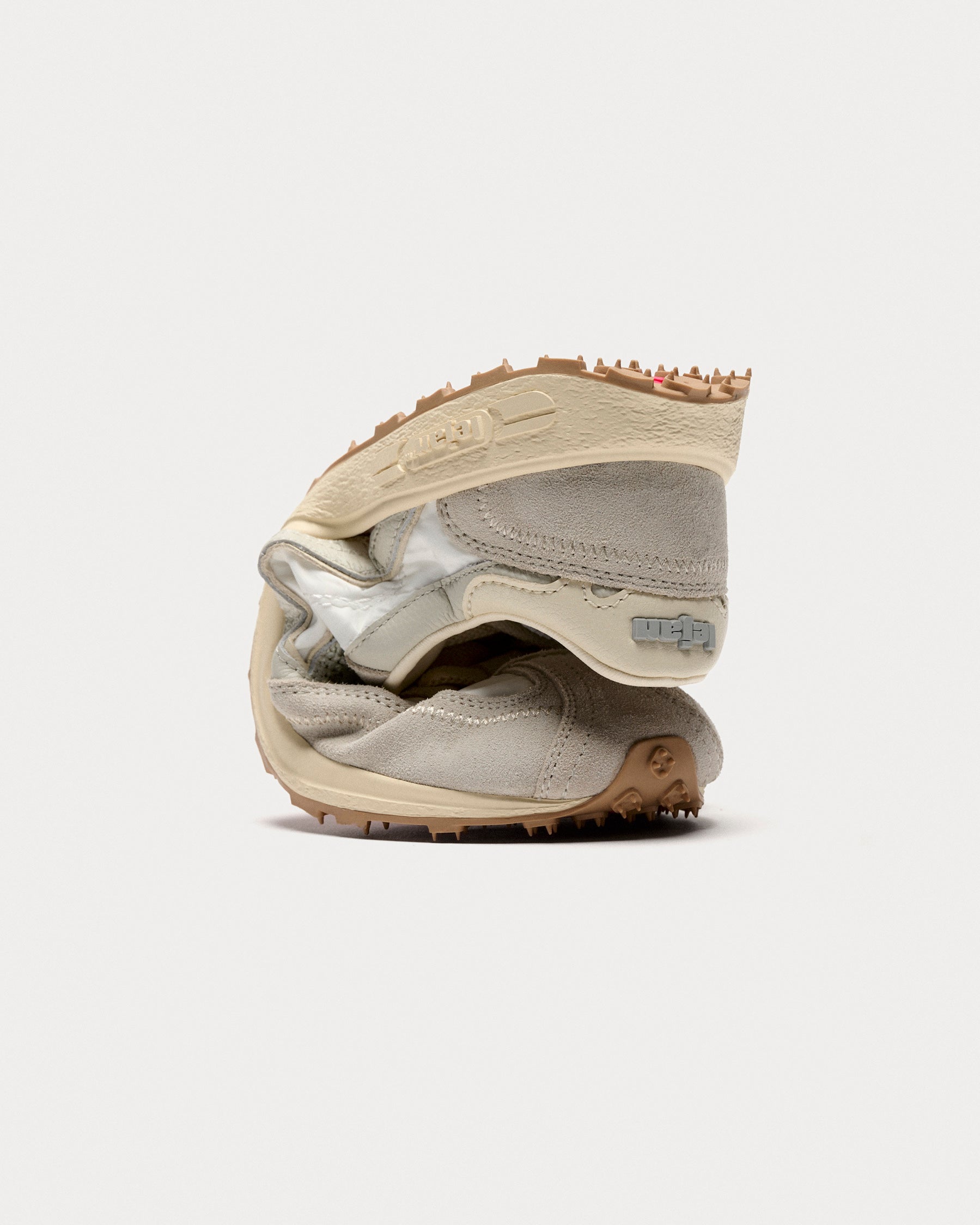
Flexible footwear with good sensitivity can help the foot better receive information from the ground and take part more in the movement. That favors proprioception and active foot work.
That said, it won't always be the best option at every moment. If there's pain or a significant overload, the context rules. But as a general idea, it makes sense to look for footwear that doesn't isolate the foot more than necessary and doesn't turn it into a rigid block.
Frequently asked questions about the pronated step
Does a pronated step always need treatment?
No. It depends on each case and on the assessment by a professional.
Can you run with a pronated step?
Yes, perfectly. Pronated isn't the same as pathological.
Which professional can assess your case?
A podiatrist is one of the most appropriate professionals to assess how your foot is working and whether that pronation needs attention or not. In some cases a physiotherapist with experience in foot, ankle and gait can also help.
The ideal isn't to settle for "you have a pronated foot", but to understand how your support is working in your specific case.
Test your knowledge
Answer the questions to check how much you know about this topic.
1. What's most important when talking about pronated step?
2. What can lead you to suspect a pronated step at home?
3. What usually makes more sense to improve a pronated step with discomfort?
4. When is a professional gait assessment advisable?

Share