


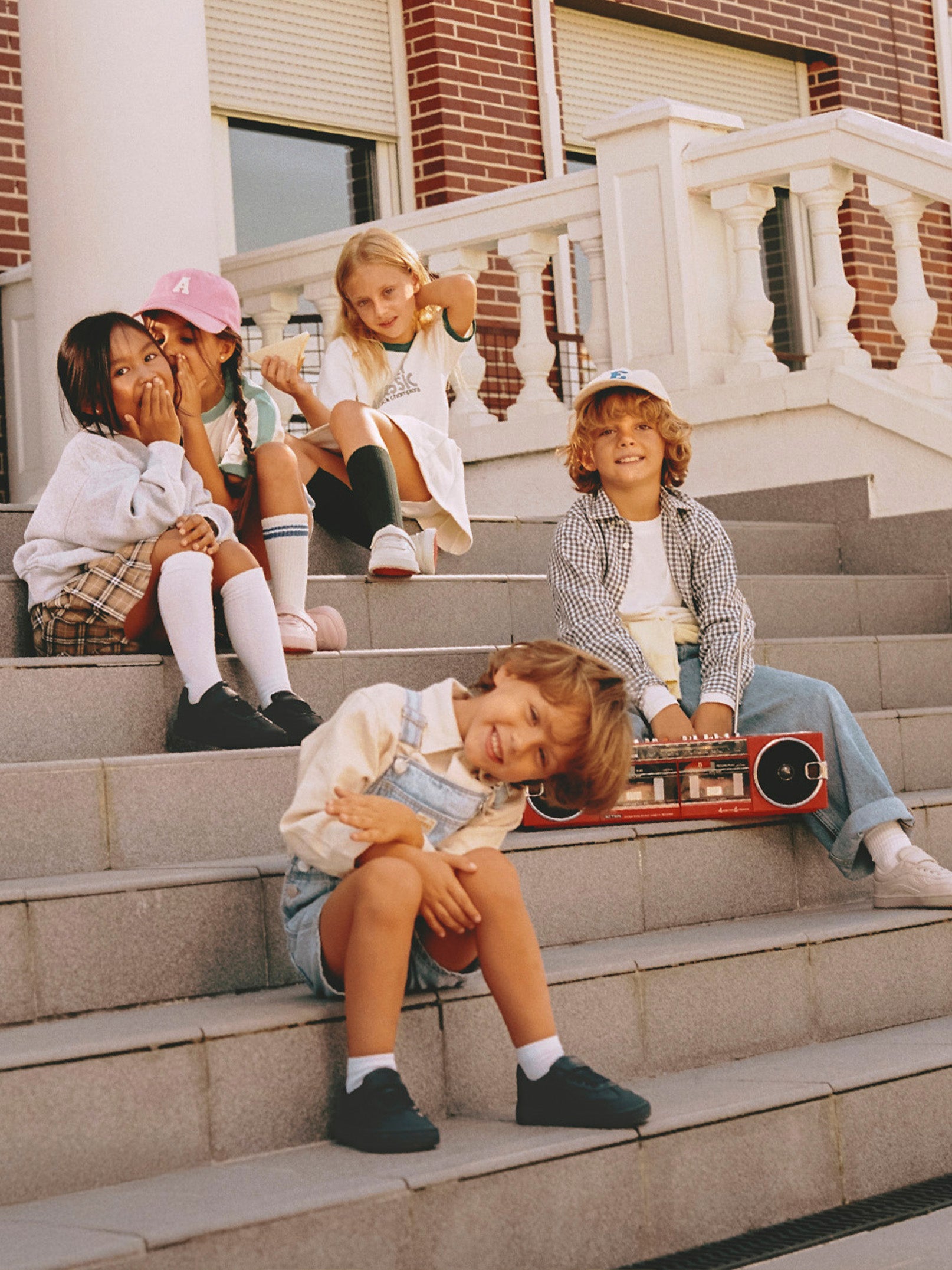


Lejan One® Kids Weekdays
Couldn't load pickup availability

Your order arrives between...
- Free shipping on orders over 70€ Free shipping on orders over 70€ Free shipping on orders over 70€
- Free size exchanges Free size exchanges Free size exchanges
- Secure payment with payment methods Secure payment with payment methods Secure payment with payment methods


Innovation that supports movement
A rigid heel counter restricts the heel's natural movement, weakening the muscles and impairing proprioception. That's why kids' footwear should have soft heel counters that protect without restricting.
The shoe should bend where the toes begin, just like the foot, to allow natural, unrestricted movement when walking.
A flexible shoe lets the foot move freely when running or jumping, strengthening muscles and supporting healthier development.
A thin, flexible sole helps your little one's foot feel the ground better, supporting proprioception and the development of the foot arch.
No heel counter
A rigid heel counter restricts the heel's natural movement, weakening the muscles and impairing proprioception. That's why kids' footwear should have soft heel counters that protect without restricting.
Metatarsal flexion
The shoe should bend where the toes begin, just like the foot, to allow natural, unrestricted movement when walking.
Twistable
A flexible shoe lets the foot move freely when running or jumping, strengthening muscles and supporting healthier development.
Little Lejan touch
A thin, flexible sole helps your little one's foot feel the ground better, supporting proprioception and the development of the foot arch.
#LejanCommunity
@lejan.brand


HOW THEY COMPARE

Lejan: Barefoot Footwear
With real space for the toes to settle without pressure.
Protects without blocking flexion or ground adaptation.
Same height at the heel and forefoot: a more stable, balanced support.
Doesn't restrict the heel, which translates into greater freedom of movement.
The foot flexes, twists and adapts without unnecessary restrictions.
The foot works harder with every step — key to support, stability and control.

Traditional Footwear
Forces the foot to adapt to the shoe, compressing the toes and limiting their function.
Isolates from the ground and can reduce the input the foot receives while standing.
Changes the support and can alter how loads are distributed.
Lock the heel in place and limit movement.
Can reduce freedom of movement and alter the stride.
Rigid structures that can reduce the foot's active work.


Lejan: Barefoot Footwear
With real space for the toes to settle without pressure.
Protects without blocking flexion or ground adaptation.
Same height at the heel and forefoot: a more stable, balanced support.
Doesn't restrict the heel, which translates into greater freedom of movement.
The foot flexes, twists and adapts without unnecessary restrictions.
The foot works harder with every step — key to support, stability and control.
Traditional Footwear
Forces the foot to adapt to the shoe, compressing the toes and limiting their function.
Isolates from the ground and can reduce the input the foot receives while standing.
Changes the support and can alter how loads are distributed.
Lock the heel in place and limit movement.
Can reduce freedom of movement and alter the stride.
Rigid structures that can reduce the foot's active work.

Your questions answered
Our customer service team is available Monday to Friday: 8:00am-8:30pm
Average response time: 24h


