
Having an ankle with good mobility can help it adapt better when walking, running or exercising. The ankle moving well doesn't guarantee that you won't suffer a sprain, but it can favor more comfortable support, a cleaner movement and fewer compensations in other areas.
If you've had sprains several times, it's not only about strengthening. It's also worth checking whether the ankle moves well, and if it has lost ease of motion, it's important to consult your specialist.
Ankle joint mobility exercises: quick answer
What movements a mobile ankle should be able to do
An ankle should be able to move well up and down, and also adapt inward and outward without stiffness. This is important in everyday gestures like walking, going down stairs, squatting down or running.
When that movement is missing, it's common to feel the ankle "hard", lift the heel earlier or do the gesture less comfortably.
Difference between mobility, flexibility and stability
Although these are often mixed up, they aren't exactly the same.
-
Mobility is for the joint to be able to move well.
-
Flexibility has more to do with the muscles and tissues not being so tight.
-
Stability is for the ankle to be able to control that movement without failing.
The ideal isn't only that the ankle moves a lot, but that it moves well and with control.
Benefits of improving ankle mobility
Working on ankle mobility can help you move more comfortably and notice less stiffness in your daily life. It can also keep other points of the body from having to do extra work when the ankle isn't going along.
More dorsiflexion to walk, run and do squats
Put simply: the ankle has to let the leg advance well over the foot. That gesture appears when walking, running, going down a hill or doing a squat.
When that movement is missing, everything becomes clumsier or more limited.

Less compensation in knee, hip and foot
If the ankle doesn't move as it should, the body usually looks for solutions elsewhere. Sometimes the foot compensates, other times the knee and other times the hip. So gaining mobility can help the movement be cleaner and more comfortable.
Before you start: how to do the exercises safely
Before getting into the routine, it's worth having a clear idea: if the ankle has just been injured, is very inflamed or hurts a lot, it isn't time to push it.
These exercises are designed to improve the mobility of an ankle that can already move, but is stiff, loaded or somewhat limited.
But above all, if you have doubts, consult your specialist.
When to stop if there's pain or inflammation
It's worth stopping if sharp pain appears, if you notice it gets more inflamed, if the ankle clearly worsens or if it's worse the next day than before.
Feeling some work or gentle tension is one thing, ending up with more discomfort is another.
Who can do this routine at home
It can be useful for people who notice their ankle is stiff, with little ease of motion, or who have had previous sprains and want to recover movement little by little.
If there's strong pain, a lot of instability or a recent injury, the best thing is not to improvise and to assess it individually with your professional.
7 ankle joint mobility exercises step by step
The idea isn't to do them perfectly from day one or to seek a lot of range by force. The key is to repeat them gently and consistently.
Ankle balance from toes to heel
Standing, shift the weight toward the front of the foot and then toward the heels, slowly and with control. It's a simple exercise to wake up the ankle and start moving it under load.
Do it without overpressing and without letting the foot drift inward or outward.
Ankle circles in both directions
Sitting or lying down, move the foot drawing wide circles in both directions. Start with a small range and gradually loosen it up.
It's a very useful exercise when the ankle feels stiff or not very loose.
Knee-to-wall test and mobility
Stand in front of a wall with one foot forward. Try to bring the knee toward the wall without lifting the heel off the floor. If you can't reach, move a little closer; if you reach easily, move it farther.
It's useful both to see how your mobility is and to work on it.
Eccentric heel lowering on a step
Step up onto a step with both feet and lower slowly, controlling the movement. Here you don't only work on mobility: you also help the ankle and the back of the leg gain control.
Do it without bouncing and without rushing.

Walking on heels and on tiptoes
Take a few steps on tiptoes and then a few steps on heels. It's a simple way to activate musculature and move the ankle in another way.
At first, a few steps are enough.
Alphabet with the ankle for joint control
Sitting, lift the foot a little and draw letters in the air by moving the ankle. It's an easy exercise but very useful to add variety to the movement and make the ankle feel looser.
Big toe and plantar fascia stretch
With your hand, gently lift the big toe and feel the tension in the sole of the foot. It doesn't directly work the ankle, but it can help because foot and ankle go hand in hand.
Weekly routine to gain mobility without overloading
For most people, it's usually better to do a little and repeat it on several days than to do a lot at once. A short, consistent and easy-to-maintain routine usually works better.
Recommended reps, sets and frequency
You can start with 4 or 5 exercises per session, for about 10 minutes, 4 or 5 days a week.
As a simple guide:
-
8 to 12 reps on movement exercises
-
30 to 60 seconds on circles or alphabet
-
2 or 3 sets if you feel comfortable
You don't need to do more if you're still starting out.
How to progress if you start from zero
Start with little range, slowly and with stable support. When you feel more confident, you can increase reps, do the gesture better or maintain more control on single-foot supports.
Progression isn't about forcing, but about noticing that each time you move better.
Common mistakes when working on ankle mobility
Sometimes the problem isn't which exercise you do, but how you do it.
Forcing range without control
Trying to reach further at any cost doesn't usually help. If to move the ankle more you cheat or pain appears, you aren't really improving.
Compensating with the foot, knee or hip
Another very common mistake is for other areas to do the movement. For example, rotating the foot, pushing the knee inward or moving the hip to make it look like the ankle is advancing more.
Habits that help maintain a more mobile ankle
Beyond the routine, there are small habits that can make a difference. The ankle needs to move in your daily life, not only for a few minutes when you do exercises.
Walking barefoot with sound criteria
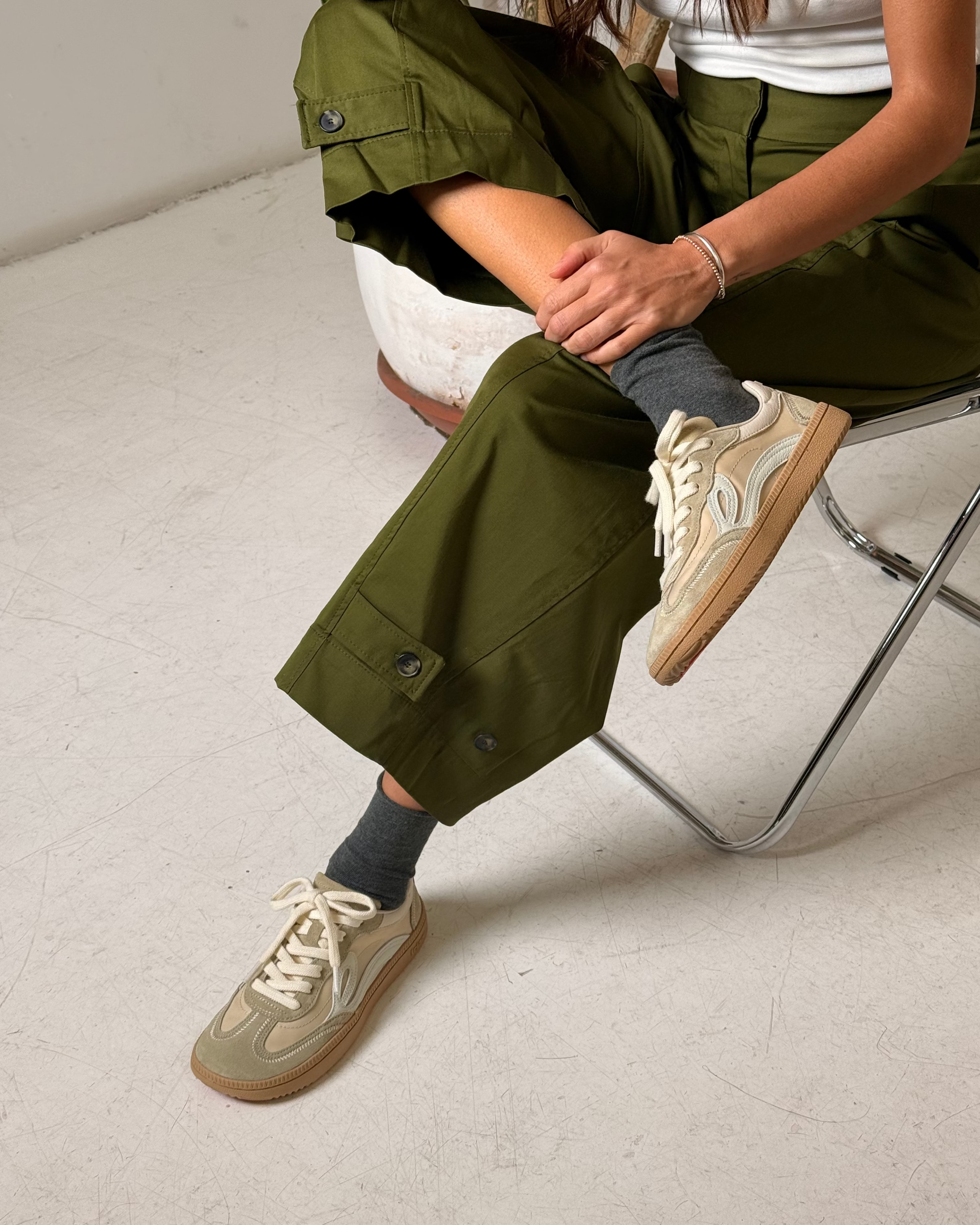
At home or in safe environments, walking barefoot for a while can help the foot and ankle take part more. That said, it's better to do it little by little and with common sense. In some cases, it can also make sense to make a progressive transition to more flexible footwear, like barefoot sneakers for adults, as long as they fit your needs and your moment.
Choosing respectful, flexible footwear with drop 0
Flexible footwear that doesn't limit the foot so much and doesn't elevate the heel can help the ankle work more freely. It doesn't perform miracles on its own, but it can let the foot and ankle do their work better. In growth stages, in addition, this kind of approach can also be interesting in options like barefoot shoes for kids, since they let the foot move more naturally.
Frequently asked questions about ankle joint mobility
How long does it take to notice improvement?
It depends on each case, but if you're consistent, it's normal to start noticing changes little by little, although there are no exact times. Rather than seeking quick results, it's worth focusing on whether the ankle feels less stiff and moves more easily.
Are these exercises useful after a sprain or for plantar fasciitis?
They can be part of the work, yes, but they aren't always the only thing needed. After a repeated sprain it usually helps to combine mobility with strength and control. And in cases of plantar fasciitis it can help, especially if there's also stiffness in the foot or ankle.
Test your knowledge
Answer the questions to check how much you know about this topic.
1. What does it mean to have good ankle mobility?
2. If the ankle has little mobility, what can happen?
3. Which of these exercises can help work on ankle mobility?
4. What should you do if sharp pain or more inflammation appears during the exercises?

Share