What drop in footwear is and why barefoot means DROP 0 mm
Chapter 3

What drop in footwear is and why barefoot means DROP 0 mm

Table of Contents

Drop explicado en 60 segundos (con ejemplos sencillos)

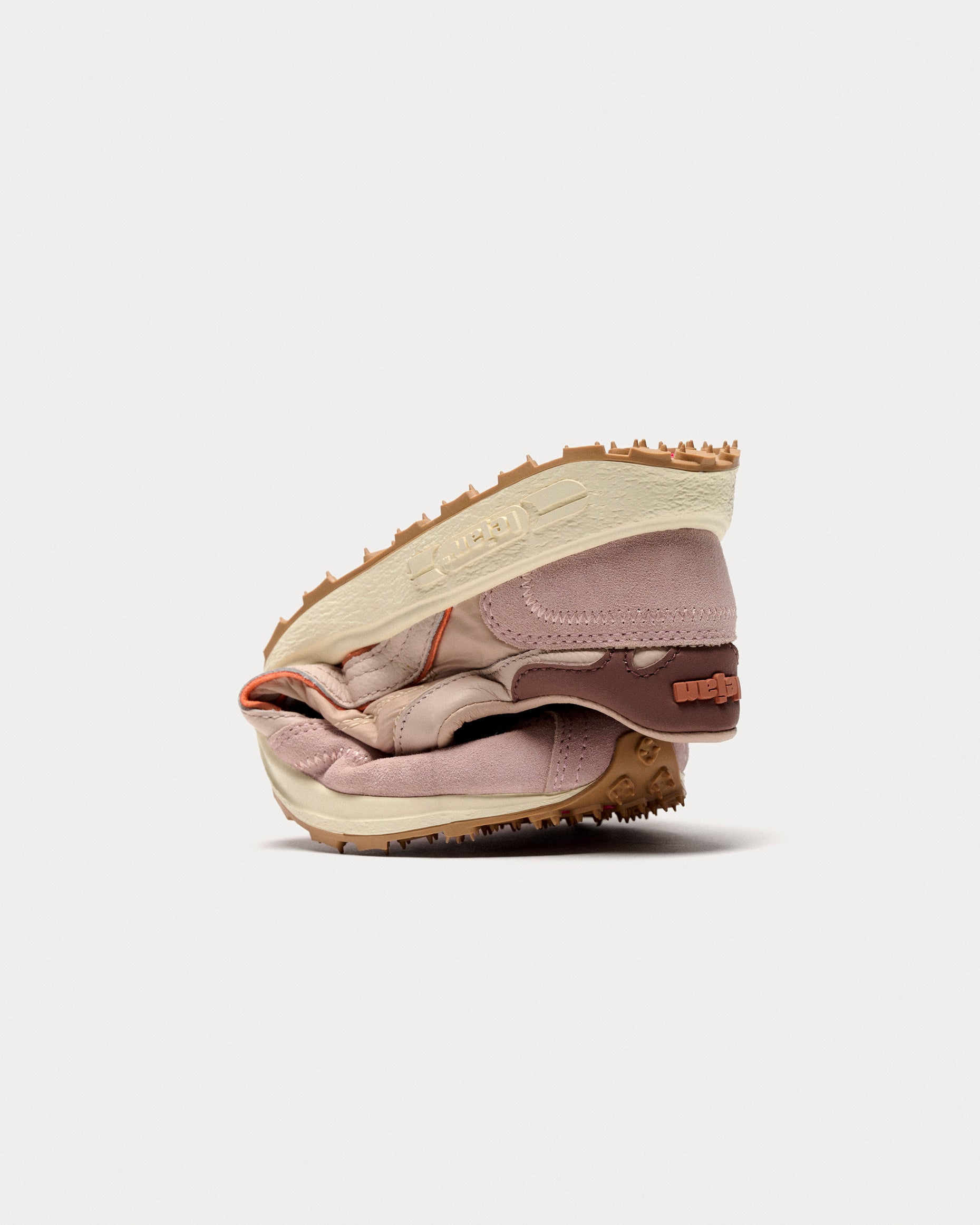
El drop es la diferencia de altura entre la parte posterior del zapato (talón) y la delantera (metatarsianos). Si atrás hay 20 mm y delante 10 mm, la diferencia que es de 10 mm sería el drop. Digamos que es una especie de “tacón” que lleva intrínseco la suela del zapato.

Cuando hablamos de calzado barefoot, el objetivo es que todas sus características sean como caminar descalzo, por lo tanto caminar totalmente plano es mucho más natural que con algo de inclinación.

Es por eso que el calzado barefoot tiene DROP 0mm, porque la altura de su suela es igual de alta en la zona del talón que en la de los metatarsianos.

Si en en el talón mide 5mm y en metatarsianos 5mm, su diferencia de altura es 0mm, por lo que tenemos un DROP 0mm, o como se dice comúnmente “no tiene drop”.

Cómo medir el drop de tus zapatillas en casa (método de la canica)

Muy fácil. Solo necesitas una canica y una superficie plana:

  1. Deja el zapato sobre la superficie.
  2. Coloca la canica en la zona del talón, encima de la plantilla.
  3. Observa si la canica se desplaza hacia delante (eso no nos indicaría que habría inclinación y por lo tanto, un drop positivo), y en caso de que la canica quede inmóvil en la zona del talón nos quiere decir que no hay incliación, por lo tanto tenemos un drop de 0mm.

Effects of drop on your body

It's important to consider the drop of a shoe when choosing it, since it can have repercussions on the way we walk (we're always referring to healthy people without conditions):

  • Postural alteration: it generates a series of "zigzag" compensations to keep us stable.
  • Gait alteration: it speeds up the first two phases of the gait, and by moving the center of gravity forward it causes a slightly forward-leaning gait.
  • Alteration in the distribution of plantar pressures: it shifts part of the weight that the heel bears toward the toes (due to its tilt), which is not natural.

That's why it's worth knowing what you're wearing and choosing with sound criteria, especially if you spend many hours on your feet.

Drop ≠ cushioning

They are not the same.

  • The drop is the height difference (angle).
  • Cushioning is the amount/property of the foam (softness).

You can have drop 0 mm with lots of foam or a high drop with a thin sole. What counts is how the combination makes you move.

Alejandro Martínez Calderón

Written by

Alejandro Martínez Calderón

Podiatrist & Founder

Podiatrist specialising in foot biomechanics. Passionate about barefoot footwear and natural foot health.

EBOOK

Download our free ebook with additional information about this chapter:

Discover more
View all