



If at the end of the day you feel your feet heavy, loaded or with little mobility, you don't always need to think of something complex. Often the foot needs exactly what we hardly ever give it: movement, activation and a bit of specific work. The foot's intrinsic musculature, along with the ankle and the back of the leg, takes part in stability, arch control and load distribution while walking. In some cases, working this area can help improve foot function, dynamic balance and some aspects related to the plantar arch, although results aren't the same in everyone or in every context.
In this article you have a simple, realistic routine designed for home. It doesn't aim to "cure everything", but to help your foot work better and reach the end of the day less fatigued.
Exercises to strengthen your feet: quick answer
When we talk about strengthening the feet, we don't mean only "making strength with the toes". The most interesting thing tends to be improving three things at once: mobility, control and stability. So a good routine combines ankle exercises, toe work, plantar arch activation and strength of part of the back-of-the-leg musculature (calves and soleus).

Which foot muscles to work and why
It's worth working both the muscles of the foot itself and the ones that help from the leg. Some are in charge of giving support, stability and control while walking; the others, especially those of the lower leg, influence how the foot moves and how it bears the day-to-day effort. When this area works better, the foot tends to feel more active, more stable and less loaded.
Benefits: balance, stability, mobility and plantar arch
The most common thing is to feel the foot more awake, with better control and less feeling of tiredness at the end of the day. Over time, these exercises can also help improve stability, mobility and the way the foot adapts to the support while walking. When the foot works better, it usually responds better in balance and in supporting the plantar arch.
Before you start: how to do them safely
The key isn't to do many exercises, but to do them well and without irritating the foot. In general, the work should feel like effort or activation, not sharp pain.
Who can do this routine at home
This routine can be useful if you notice tired feet at the end of the day, some stiffness, little mobility or a feeling of weakness. It can also be useful if you spend many hours on your feet or if you feel the foot does little work when walking. That said, it's designed for mild discomfort and as general work, not to replace a professional assessment if there's significant pain or an injury.
Signs to stop and consult a podiatrist
It's worth stopping if sharp pain appears, a clear increase in inflammation, tingling, loss of sensitivity, persistent cramps or worsening that lasts into the next day. It also deserves assessment if heel pain is intense, if there's significant limitation or if the problem has gone weeks without improving. If you have doubts, the most prudent thing is to first assess what's going on before continuing to load the foot.
8 exercises to strengthen the feet step by step
Ankle circles to gain mobility
If the ankle moves little, the foot tends to compensate worse. This exercise is a simple way to start.
How to do it
Sit or lie down with the leg relaxed. Slightly raise the foot and draw slow circles with the ankle in one direction and then the other.
How much to do
Do 8 to 10 circles per side in each direction.
What to focus on
That the movement is slow and wide, without doing it in jerks.
Toe spreading and control
Many people can hardly move their toes independently. Recovering that control helps more than it seems.
How to do it
Barefoot, place the foot on the floor and try to spread the toes gently. It's no problem if at first they barely move. The idea isn't to open them widely, but to gain awareness and control.
How much to do
Do 2 or 3 sets of 8 gentle reps.
What to focus on
Avoid scrunching the whole foot or over-tensing the leg.
Big toe lift and toe dissociation
This exercise works on something very useful: that the big toe moves without the whole foot losing control.
How to do it
With the foot supported, try to lift only the big toe while the other four stay in contact with the ground. Then do the opposite: leave the big toe down and try to lift the others.
How much to do
6 to 8 reps of each variant per foot.
What to focus on
At first it's quite hard. That's normal.

Scrunching a towel with the toes
It's one of the classics, and still makes sense as a basic activation exercise.
How to do it
Sitting, place a small towel on the floor. Step on the end and scrunch it toward you with the toes.
How much to do
1 or 2 complete passes per foot.
What to focus on
Don't compensate with the hip. The movement should come mostly from the foot. This kind of exercise is part of widely used clinical foot and ankle conditioning programs.
Picking up small objects with the foot
Very similar to the previous one, but a bit more dynamic.
How to do it
Place several small objects on the floor, such as large marbles, handkerchiefs or soft blocks, and pick them up with your toes to put them in a container.
How much to do
5 to 10 objects per foot.
What to focus on
Quality is better than speed.

Plantar arch activation or "short foot"
This is probably one of the most interesting exercises to work the intrinsic musculature.
How to do it
Standing or sitting, place the whole foot on the floor and try to activate the arch area, as if you wanted to gently shorten the foot from inside, without bending the toes. The idea isn't to grip the floor, but to feel the foot activating and gaining control.
How much to do
2 or 3 sets of 5 to 8 reps, holding 5 seconds each.
What to focus on
If you see the toes scrunching too much or you press the floor hard, you're probably compensating. Ideally, the movement should come from the foot in a soft, controlled way, without excessive tension.
Heel raises for feet and calves
Here the back of the leg works more, and so does the foot's ability to better support the load when walking and standing. It's a useful exercise to gain strength, stability and endurance day to day.
How to do it
Standing, with support against a wall or chair if you need it, raise the heels slowly and lower with control.
How much to do
2 or 3 sets of 10 to 15 reps.
What to focus on
Make sure the weight is well distributed and the ankle doesn't go too far inward or outward. The rise and the descent should be slow and controlled.
Rolling a ball and stretching the plantar fascia
This exercise isn't so much about strength as it is about offloading and giving back some mobility to the plantar tissue.
How to do it
Sitting or standing with little load, roll a small ball under the sole of the foot for 1 or 2 minutes. Then cross the leg and gently pull the toes toward you to feel a stretch in the plantar fascia.
How much to do
1 to 2 minutes of rolling and 20 to 30 seconds of stretching, 2 or 3 times.
What to focus on
It should relieve or stretch, not irritate.
Weekly routine to notice results without overloading the foot
What usually works best isn't doing a lot one day, but repeating a little several times a week.
How many reps to do
As a base, you can start with 4 or 5 exercises per session, 2 or 3 sets per exercise, 8 to 12 reps in dynamic movements and 20 to 30 seconds in gentle stretches. In foot and ankle conditioning programs, almost daily frequencies are used for simple exercises, but at home it makes sense to adapt the load to your sensations and not start all at once.
How to progress if you start from zero
Start 3 days a week. When the exercises feel easy and don't leave residual discomfort the next day, you can move up to 4 or 5 days or slightly increase time under tension. The most useful progression tends to be: first control the movement, then hold it better and afterwards load it a bit more.
Common mistakes when strengthening the feet
Compensating with the ankles or knees
It happens a lot. Instead of working the foot, we rotate the leg, push the knee inward or squeeze the toes too much. Fewer reps done better tends to give better results.
Wearing rigid footwear all day and stopping the foot from working
If the foot spends many hours inside rigid footwear, with little space for the toes and little freedom of movement, it then has more difficulty activating and working well. It's not about going barefoot all the time, but about not continuously limiting the foot's natural movement.
Habits that multiply the effect of the exercises
The exercises help more when the rest of the day doesn't go in the opposite direction.
Walking barefoot with sound criteria
At home or in safe environments, walking barefoot for short stretches can help return stimulus and participation to the foot. But it isn't always advisable to do it a lot from the start, especially if there's active plantar pain, a lot of sensitivity or a very abrupt change in load. Here, judgment matters more than idealism. In plantar fasciitis, for example, some clinical recommendations prioritize controlling load and symptoms before increasing exposure.
Choosing respectful footwear with a wide toe box, drop 0 and a flexible sole
Footwear that leaves real space for the toes, doesn't elevate the heel and allows some flexion can make it easier for the foot to work more and better. Even so, not everyone should make drastic changes from one day to the next, especially if they're coming from pain or marked stiffness. The sensible thing is for the change to accompany the process, not force it.
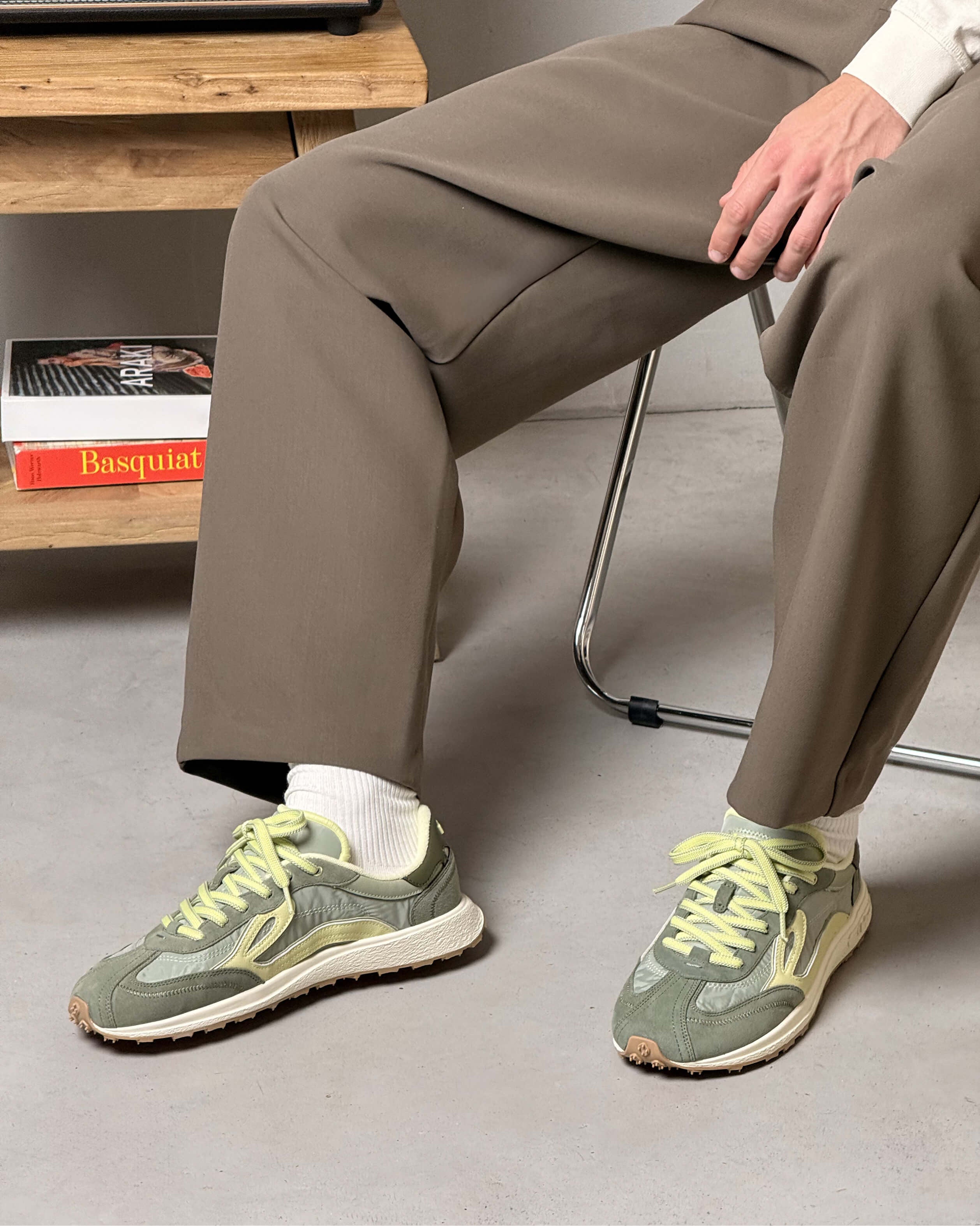
If you're considering options for daily use, it can be useful to take a look at a selection of barefoot sneakers for adults that respect the foot's natural movement and offer enough room in the front.
Frequently asked questions about how to strengthen the feet
How long do strength and mobility take to improve?
It depends on the starting point and on consistency; there are no exact times. But what's most common is to first notice better control and less feeling of stiffness rather than dramatic strength changes.
Whether they help with plantar fasciitis, bunions or tired feet
They can be useful as part of management, but they don't replace an assessment when there's persistent pain or deformity. In problems such as plantar fasciitis, very loaded feet or certain day-to-day discomforts, these exercises can be helpful to improve mobility, activation and foot control. Even so, they don't on their own correct a structural problem nor do they work the same in every case.
Test your knowledge
Answer the questions to check how much you know about this topic.
1. What can a routine to strengthen the feet provide?
2. What sign indicates that an exercise is not being done well?
3. Who can a basic foot exercise routine be useful for?
4. What can hinder the foot from working better day to day?

Share