A baby's first steps are usually a moment of great excitement. It's one of those milestones that families wait for, film and remember for years. But it can also raise questions: “should they be walking already?”, “are they slower than other babies?”, “do I need to help them more?”, “do they need shoes?”.
The truth is that not all babies start walking at the same age. Every little one has their own pace, their own way of moving and their own way of building confidence. Rather than focusing only on the exact month they start to walk, it's worth observing how their body is getting ready: whether they pull themselves up, look for support, move around, experiment with balance and show a desire to move on their own.
Supporting this stage isn't about speeding up the process, but about creating a safe environment so the baby can explore, try things out and move forward little by little.
When babies start walking and which ranges are normal
Many babies take their first steps around their first birthday, but it's not a fixed date. Some little ones walk a bit earlier and others need more time.
In general, independent walking can appear between 9 and 18 months. When we talk about independent walking we don't mean a single step while holding a hand, but rather the baby being able to take several steps unaided without falling over straight away.
Before walking on their own, babies usually go through small milestones: better control of the head and trunk, rolling over, crawling on their belly, crawling or moving around in some way, standing up with support, taking sideways steps while holding on to furniture and, finally, letting go.
That's why comparing one baby with another doesn't always help. Two children of the same age can be at different stages and both still be developing normally. One may set off early, with unsteady steps and lots of falls; another may take longer, but start once they feel more stable.
What matters is to look at the whole picture: how they move, whether they're gaining strength, whether they use both sides of the body, whether they're keen to move around and whether they're acquiring new skills over time.
What's more, starting to walk doesn't mean walking like an adult. Walking gets organised over the first few years. At first it's normal for steps to be irregular, for them to spread their legs wider, to open their arms to balance or to change the way they place their feet a lot.

Signs that your baby is ready to walk
Before the first steps there are usually fairly clear signs. They don't all appear at once or always in the same order, but they show that the baby is starting to build the strength, balance and confidence they need to walk.
Standing up with support
One of the first signs is usually that the baby tries to pull themselves up by holding on to furniture, bars, legs or any stable surface nearby.
This gesture seems simple, but it involves a lot of work: they need strength in the legs, trunk control, coordination and balance. At first they may struggle to get up, stay rigid or not quite know how to sit back down. Little by little, they learn to bend their knees, control their body better and lower themselves more safely.
At this stage it's important for the environment to be stable. It's better to offer firm, safe surfaces than to constantly try to lift them up by the hands.
Taking sideways steps while holding on to furniture
After standing up, many babies start to move sideways by holding on to the sofa, a low table or some stable piece of furniture. This is often called cruising.
It's a very important stage because the baby starts to transfer weight from one leg to the other. They learn to move one foot, reposition the other, hold on, let go with one hand and judge distances.
Even though they're not walking on their own yet, they're already practising many of the skills they'll use later on: balance, coordination, foot support and spatial awareness.
Holding their balance for a few seconds
Another typical sign is the baby standing for a few seconds without holding on. Sometimes it happens almost without them noticing: they let go to grab a toy, clap, look at someone or change their support.
At first this balance lasts very little. They may sit down quickly, drop onto their nappy or reach for the furniture again. That's normal. Staying upright without support requires constantly adjusting the body.
These few seconds are important because they help the baby understand how to place their feet, how to distribute weight and how to react when they lose stability.
Showing an interest in moving around on their own
Not all babies set off in the same way. Some are bolder and take steps even if they fall many times. Others observe more, try things out gradually and need to feel very secure before letting go.
An interest in moving around can show in many ways: trying to reach a toy, moving towards a person, letting go for a moment, pushing objects or looking for new ways to get around.
That desire to move on their own is an important part of the process. When the baby has the chance to explore in a safe space, they usually find their own strategies.

Stages before the first steps
Walking doesn't appear out of nowhere. Beforehand there's a whole maturing process that begins long before standing up.
Head and trunk control
Head and trunk control is a fundamental basis for movement. Before walking, the baby needs to learn to support themselves, turn, sit, lean over and come back to the centre.
All of this helps them organise the body. When the trunk gains stability, the legs and arms can move with more coordination.
That's why the earlier stages aren't “filler”. Every posture, every turn and every attempt to pull up is part of motor learning.
Crawling, belly-crawling or free movement
Crawling usually appears before walking and can take many forms. Some babies crawl on hands and knees, others shuffle along on their belly, others move around sitting and others spend less time in this phase before walking.
Typical crawling, on hands and knees, can provide a very useful basis for motor control, coordination between arms and legs and preparation for walking. It also helps the baby relate to space from the floor and gain confidence before standing up.
But a baby not crawling in the classic way doesn't automatically mean there's a problem. What matters is that they have opportunities to move freely, change position, explore and gain strength without always being limited by bouncers, chairs or devices.
It is worth paying more attention if the movement is very asymmetrical in a sustained way, for example if they always drag one leg, clearly use one side of the body more or avoid putting weight on a particular part. In those cases, a professional assessment can help to understand whether it's simply their way of moving or whether there's something to check.
Standing and balance
Standing is the stage in which the baby begins to be on their feet. First with a lot of support, then with less, and later for a few seconds on their own.
At this stage the foot starts to take on new loads. The baby tries out how to bear weight, how to spread the feet to feel more stable and how to reposition the body when they lose balance.
At first it's normal for them to walk with their legs further apart, their arms open and irregular steps. That posture helps them feel more secure while they learn.
The orientation of the feet can also vary. In the first few years walking is still maturing, which is why the feet may turn out a bit, turn in or take inconsistent steps. What matters is to observe whether it's progressing, whether it's symmetrical and whether the little one moves without pain or obvious limitations.
How to support their first steps without forcing them
Supporting doesn't mean rushing. The baby doesn't need us to teach them to walk as if it were a task. They need space, time, safety and presence.
Free movement and a safe environment
One of the best ways to support this stage is to prepare an environment where they can move freely. A clear floor, stable furniture, protected corners and dangerous objects out of reach.
Spending time on the floor is also important. From there they can turn, crawl on their belly, crawl, sit, get up and go back down again. The floor offers real opportunities to practise.
When the baby moves freely, they gradually test their limits. They learn when they can move forward, when they need support and how to regain their balance.
Why it's not a good idea to rush stages
Sometimes, out of excitement or comparison, we may try to get the baby to walk before they're ready. But rushing stages doesn't make them walk better.
Constantly standing them up, walking them by the hands for a long time or insisting they take steps when they don't yet have enough control can make them rely too much on the adult and not learn to organise their own balance.
Each stage contributes something. Time on the floor, changes of posture, crawling or free movement help build the basis they'll later need to walk with more confidence.
When to avoid baby walkers or unnecessary aids
Baby walkers aren't usually recommended. Although they may give a sense of autonomy, they don't teach the baby to walk in a real way. In many cases they put the little one in a posture they may not yet be ready for and can encourage fast movement without enough control.
It's also best to avoid aids that keep the baby standing artificially for a long time. If they need too much support to stay upright, they're probably still building that skill.
It's better to let them hold on to safe furniture, push stable objects suited to their stage or practise from the floor. The key is for them to take an active part, rather than the device doing the work for them.
What footwear to choose when they start walking
When the baby is at home or in a safe space, the ideal is usually for them to be able to move barefoot or in non-slip socks, as long as the temperature and the environment allow it. That way the foot can better receive information from the ground and take part in balance.
Footwear starts to make more sense when the baby walks outdoors or needs protection from the cold, the ground or possible scrapes. At that point, what matters is to choose a shoe that protects without limiting.
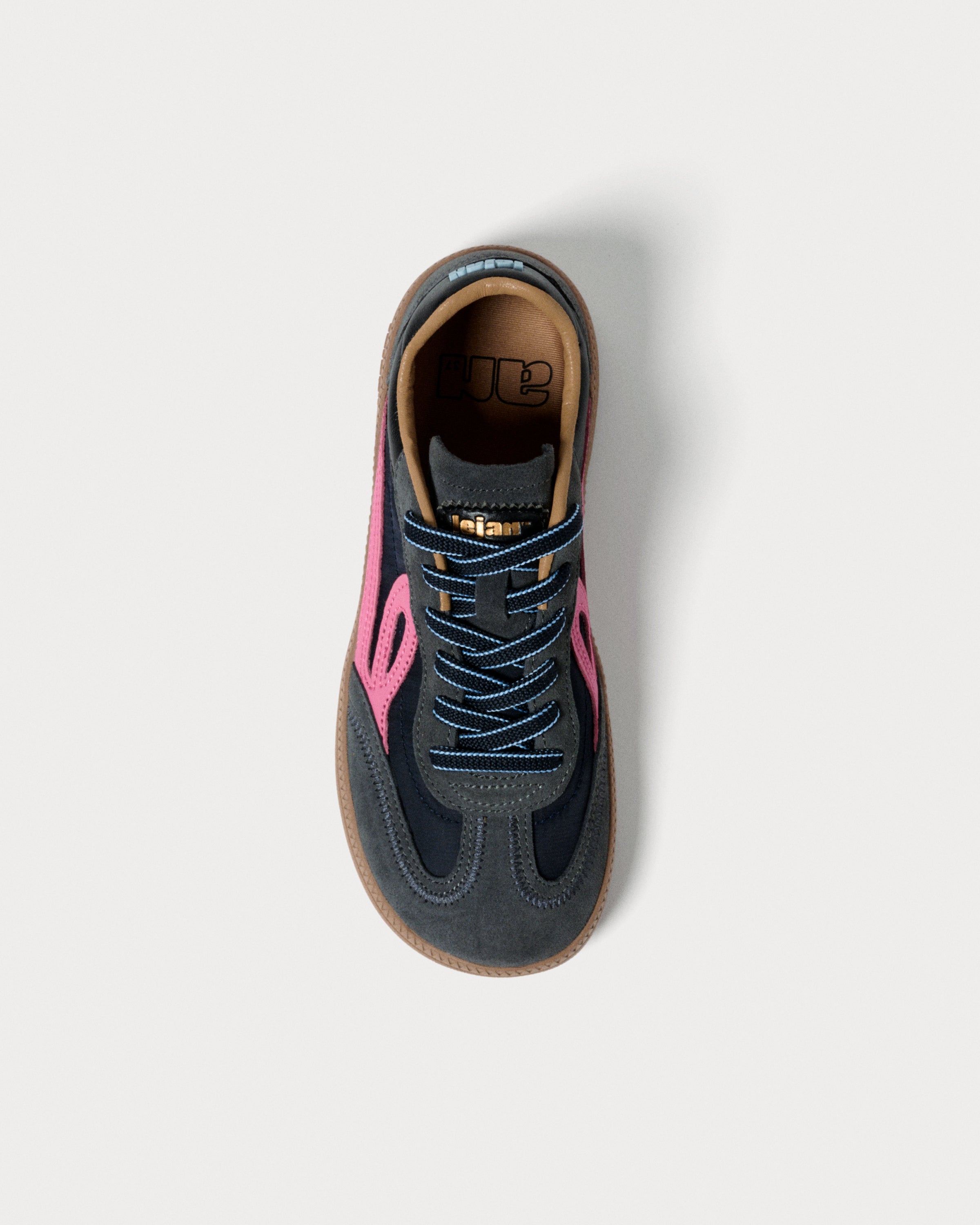
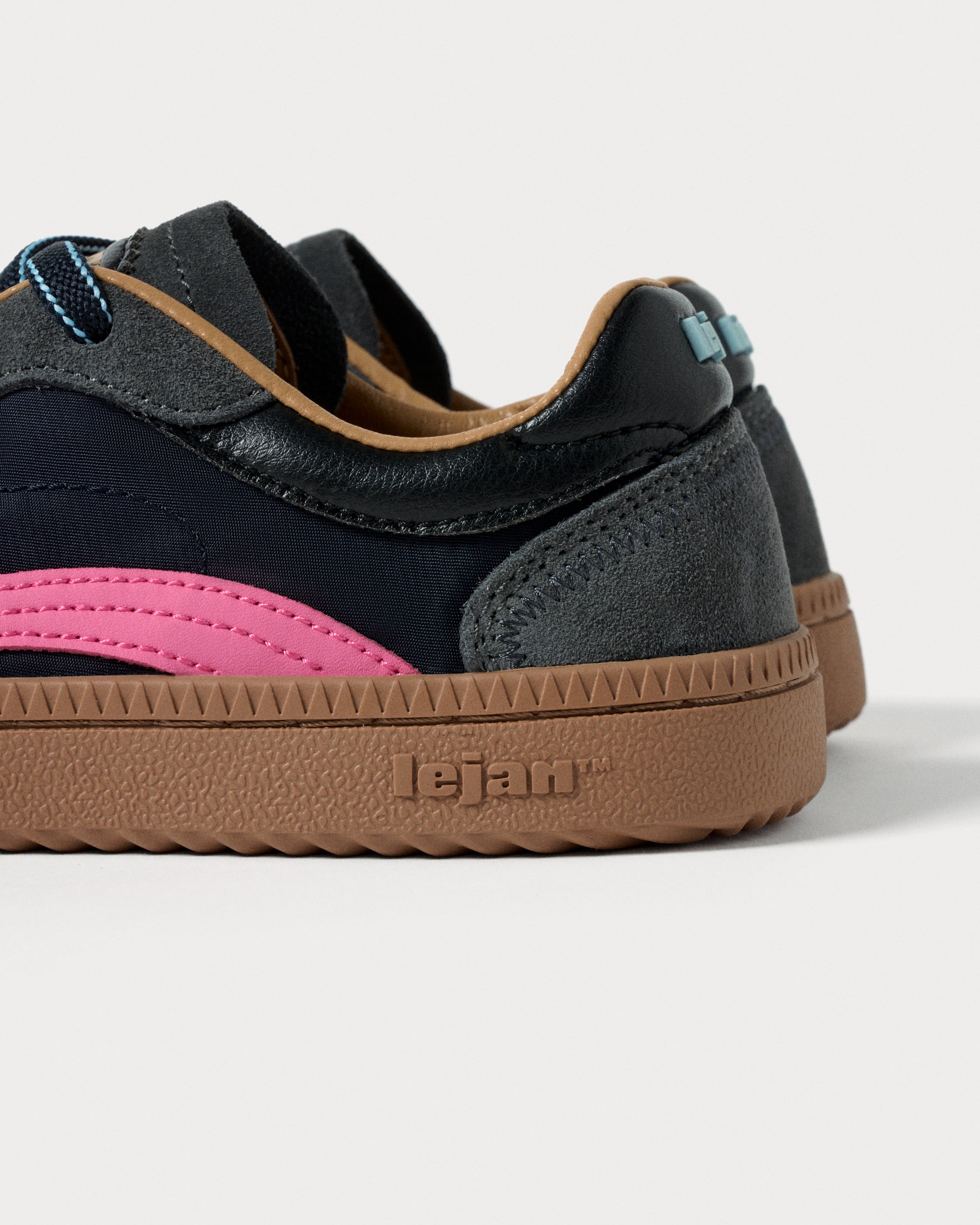
Good first-steps footwear shouldn't make the shoe the star, but the foot. It should protect, support and let the baby keep discovering how to move.

Wide toe box and anatomical last
A baby's foot isn't pointed in shape. Their toes need space to spread out, bear weight and help with balance.
That's why a wide toe box and an anatomical last are especially important at this stage. The shoe shouldn't squeeze the toes or force them to point inwards.
A good trick is to take out the insole, if it's removable, and place the foot on top. That way you can see whether the toes really have space or whether the shoe looks roomy on the outside but is narrow inside.
Thin, flexible sole and drop 0
The sole should be flexible so the foot can move. If a shoe is too rigid, the baby has more difficulty bending the foot, adjusting their support and adapting to the ground.
It should also be a thin sole, without excess cushioning. In the first steps, the baby doesn't need a heavy structure or a very high sole, but a base that lets them feel better how they're bearing weight.
Drop 0 means that heel and forefoot are at the same height. There's no rise at the back. This helps the foot bear weight without an added tilt inside the shoe.
At this stage, the idea is for the footwear to interfere as little as possible: to protect, but not to block the movement of the foot or take away too much information from its support.
Breathable materials and easy fastening
For babies, footwear also has to be practical. Soft, breathable materials that feel pleasant against the skin help to avoid chafing and overheating.
The fastening should be simple, but secure. Velcro straps, elastics or easy-to-open systems make it possible to position the foot properly without fighting with the shoe.
That said, fastening doesn't mean pressure. The shoe should hold enough so it doesn't come off, but without pressing on the instep, the toes or the heel.
When to consult a professional
Even though every baby has their own pace, there are situations in which it's worth consulting the paediatrician, paediatric physiotherapist or children's podiatrist.
It's advisable to ask for an assessment if the baby shows no interest in standing up or moving around as the months go by, if they're not walking by around 18 months, if they clearly use one side of the body more than the other, if there's a lot of stiffness or a lot of floppiness, if they drag one leg, if they seem to be in pain or if they lose skills they had already acquired.
It's also worth consulting if, once they start walking, falls are very frequent for a long time, if their support seems very asymmetrical or if the family notices something that worries them.
Consulting doesn't mean being alarmed. Often it serves to confirm that everything is fine or to spot small support needs in good time.
Frequently asked questions about first steps
Is it normal for them to walk later than other babies?
Yes, it can be normal. Some babies walk before their first birthday and others start closer to 16, 17 or 18 months. Development isn't a race.
Rather than focusing only on the exact age, it's worth observing whether the baby is making progress: whether they move, pull themselves up, look for support, gain balance and show an interest in moving around.
If they're getting close to 18 months and still aren't walking independently, or if there are other signs that worry you, the right thing to do is to consult a professional.
Is it bad if they don't crawl before walking?
Not necessarily. Crawling is a very interesting and beneficial stage, but not all babies crawl in the same way. Some shuffle along on their belly, others move around sitting and others quickly move on to standing up.
What matters is that the baby has opportunities to move on the floor, change position, explore and use their body actively.
It is worth checking if the movement is very asymmetrical, if they always avoid putting weight on one part of the body or if there's also little mobility, a lot of stiffness or difficulty supporting themselves.
Should they wear shoes before walking?
Before walking, shoes aren't usually necessary except to protect from the cold or the environment. At home, if the space is safe, the foot is usually better free, barefoot or in non-slip socks.
When they start walking outside the home, the shoe should protect without blocking. It's better to choose footwear that is light, flexible, with a wide toe box, a thin sole and no rise between heel and forefoot.
What signs show that the footwear is limiting them?
There are several signs that may indicate the shoe isn't supporting the baby's movement well:
-
The toes are left marked or squeezed.
-
The little one trips more since they started wearing that footwear.
-
They find it hard to bend the foot when walking.
-
They take the shoes off constantly.
-
Redness, marks or chafing appear.
-
They walk more stiffly or seem less secure.
-
The shoe is too heavy or doesn't bend easily.
Footwear suited to first steps should protect without imposing. The less it limits the movement of the foot, the easier it will be for the baby to keep exploring, adjusting their balance and gaining confidence step by step.
Test your knowledge
Answer the questions to check how much you know about this topic.
1. At what age is it usually considered normal for a baby to start walking independently?
2. Which of these signs can indicate that the baby is getting ready to walk?
3. If a baby doesn't crawl in the classic way before walking…
4. What type of footwear is usually most suitable when the baby starts walking outside the home?

Share