



Seeing a child walk on tiptoes can raise questions, especially when it happens frequently or when they don't seem able to place the heel down properly. In some cases, walking on tiptoes is part of a passing phase in the development of walking. In others, it may be related to muscle tension, limited mobility, sensitivity to contact with the ground or some aspect of development that is worth assessing.
The key isn't only to notice that the child walks on the front of the foot, but to observe when they do it, how often, whether they can place their heels down and whether there are other associated signs.
There is no need to be alarmed every time, but it shouldn't be ignored either if it continues over time.
What is toe walking and up to what age is it normal?
Toe walking happens when the child walks mainly on the front of the foot, without the heel clearly touching the ground. They may do it all the time or only at certain moments: when running, when barefoot, when excited, when walking on certain surfaces or when concentrating on an activity.
In young children who are learning to walk, it can appear occasionally. During the first months of walking, the body is still organising balance, support, strength and coordination. That's why some children try out different ways of moving before settling into a more stable gait.
It can be considered fairly normal when the child is young, does it from time to time and can place the heel on the ground without difficulty. Also when there is no pain, stiffness, frequent falls or clear differences between one leg and the other.
On the other hand, it's worth paying more attention if toe walking continues after the age of 2, if it appears most of the time or if the child can't place the heels down even when we ask them to.
5 common causes of walking on tiptoes
1. Habit or idiopathic toe walking
In some children, no specific cause is found. The child may walk on tiptoes out of habit, out of a preference for that movement or because they have kept that pattern for too long.
In these cases, they can place the heel down if asked, but spontaneously they go back to walking on the front of the foot. Although it doesn't always cause pain, it's worth observing if it happens a lot or if placing the heel down becomes increasingly difficult.
2. Tightness in the calf, soleus or Achilles tendon
When the muscles at the back of the leg are tighter, the child may find it hard to bring the heel to the ground. In these cases, walking on tiptoes isn't just a quirk but a way of compensating for that lack of mobility.
It may show in the child avoiding placing the heel down, tiring more easily, struggling to squat with flat feet or walking with a feeling of stiffness in the legs and ankles.
3. Limited ankle mobility
The ankle needs to move well so that the foot can land, move forward and push off the ground naturally. If the ankle has little mobility, the body may look for an easier strategy: lifting the heel and walking on the forefoot.
That's why, when a child walks on tiptoes, it isn't enough to look only at the foot. It's also worth observing how they move the ankle, how they bend the knees and how they distribute weight when walking.
4. Sensitivity to contact with the ground
Some children walk on tiptoes because certain surfaces feel uncomfortable or too intense for them. It can happen with cold or rough floors, with sand, grass or textures they don't tolerate well.
In these cases, walking on tiptoes can be a way of reducing contact between the sole of the foot and the ground. There isn't always pain, but there may be a rejection of certain sensations.
5. Neurological, muscular or developmental factors
In some cases, toe walking may be related to neurological, muscular, orthopaedic or developmental factors. It isn't the most common scenario, but it should be considered if there is stiffness, asymmetries, delay in other milestones, loss of skills, marked clumsiness or real difficulty placing the foot flat.
That's why, if toe walking is persistent or appears alongside other signs, the most sensible thing is to request a professional assessment.
Toe walking and Autism (ASD): what is the connection?
Some children with Autism Spectrum Disorder may walk on tiptoes, but that doesn't mean that every child who walks this way has ASD.
The connection tends to be more linked to the way some children process sensations from the body and the environment. There may be more sensitivity to contact with the ground, a seeking of certain sensations, a preference for particular movement patterns or difficulty integrating some stimuli.
That's why walking on tiptoes on its own doesn't allow any conclusions to be drawn. You have to look at the whole picture: how the child communicates, how they play, how they relate to others, how they respond to change, whether there is rigidity in routines, marked sensory sensitivity or delay in other aspects of development.
If toe walking appears together with other developmental signs, it's worth mentioning it to the paediatrician to assess whether a referral to other professionals is needed.
5 risks of not addressing it in time
Not every child who walks on tiptoes will have problems. Some do it for a phase and then correct it on their own. But when the pattern is maintained over time, it can have consequences for mobility, support and the way of walking.
1. Shortening of the back muscles
If the child walks for a long time without placing the heel down properly, the muscles at the back of the leg can stay in a shorter position. This can make it increasingly hard to place the foot flat.
2. Reduced ankle mobility
The lack of heel contact can limit the natural movement of the ankle. Over time, the child may find it more difficult to walk, run, jump or squat with the feet placed down.
3. Changes in load distribution
When walking on tiptoes, weight is concentrated more on the front of the foot. This can increase pressure on the forefoot and change the way the child distributes loads when walking.
4. More tiredness or discomfort
When support isn't efficient, the body may use more energy to move around. Some children may tire sooner, avoid certain games or complain of discomfort in the feet, legs or back.
5. A poorly functional gait pattern becoming established
The longer a pattern is maintained, the easier it is for the body to integrate it as a habitual way of moving. That's why, if toe walking is constant, it's worth reviewing it before it turns into a compensation that's hard to change.
When should I take my child to the doctor?
It's worth requesting an assessment if the child walks on tiptoes most of the time, if they are over 2 years old and the pattern persists, or if they can't place their heels on the ground.
It's also advisable to seek advice if there is stiffness in the legs, pain, frequent falls, poor coordination, differences between one foot and the other or difficulty running, jumping or going up and down stairs.
There are some signs that are worth reviewing more closely:

-
They walk on tiptoes almost all the time.
-
They can't place the heels down even when we ask them to.
-
They only walk on tiptoes with one foot.
-
They have pain in the feet, legs or back.
-
They fall a lot or seem clumsier than usual.
-
They have stiffness in the calf, soleus or ankle.
-
They have suddenly started walking on tiptoes after walking normally.
-
There is delay in other aspects of development.
-
They reject many textures or surfaces when walking barefoot.
A professional assessment doesn't always mean there is a significant problem. Sometimes it simply serves to confirm that everything is within the expected range and to give simple guidance. Other times it allows a limitation in mobility, muscle tension or a pattern that needs monitoring to be detected.
6 treatment options for toe walking

The treatment depends on the cause, the child's age, how often they walk on tiptoes and whether or not they can place the heels down. Not all cases need the same approach.
1. Observation and monitoring
When the child is young, walks on tiptoes only occasionally and can place the heel down without difficulty, it may be enough to observe how things develop.
In these cases, it can be supported with free play, varied movement and check-ups if the pattern continues or any warning sign appears.
2. Mobility exercises and games
Some children may benefit from games that encourage full contact of the foot and ankle mobility. For example, walking slowly with the whole foot placed down, going up small slopes, playing at squatting, walking on safe surfaces or doing balance games.
The idea isn't to correct every step or pressure the child, but to offer opportunities for movement where the heel also takes part.
3. Guided stretching
If there is tightness in the calf, soleus or Achilles tendon, stretches adapted to the child's age can be prescribed. They should be done gently, without pain and following a professional's guidance.
It isn't about forcing the foot downwards, but about gradually improving mobility and tolerance to placing the foot down.
4. Paediatric physiotherapy
Physiotherapy can help when there is stiffness, limited mobility, balance issues or difficulty integrating fuller contact of the foot. The work may include mobility, strength, coordination, postural control and gait re-education.
In young children, it's usually approached through play and activities adapted to their stage.
5. Reviewing the footwear
Footwear doesn't correct toe walking on its own, but it can make movement easier or harder. That's why it's worth checking that the shoe isn't stiff, narrow, heavy or with a big difference in height between heel and forefoot, although this last point is sometimes beneficial.
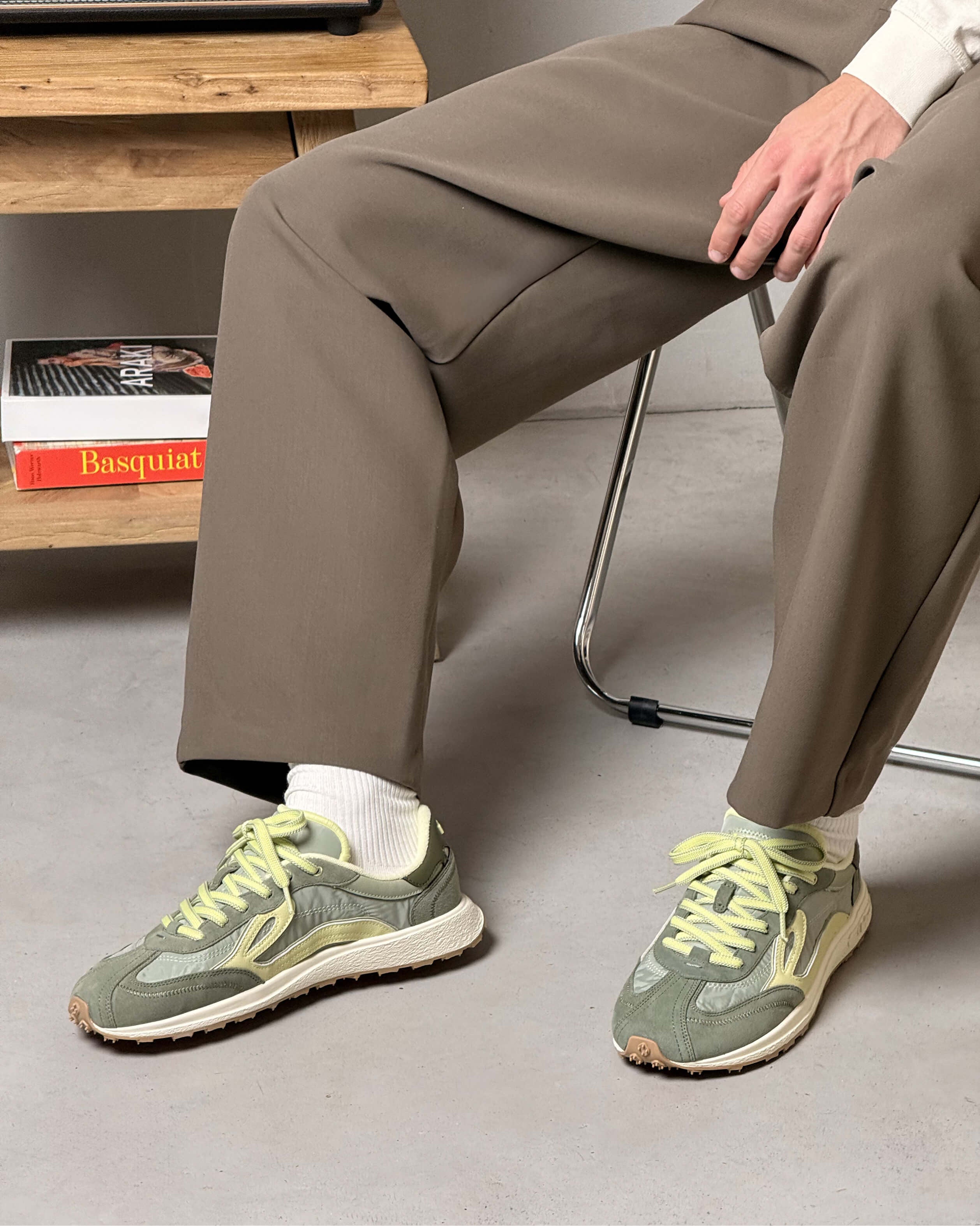
When there is no specific professional recommendation, more respectful footwear can help give the foot more space and freedom. A wide toe box, a flexible sole and a base with no height difference allow the foot to move with fewer constraints.
6. Specific treatments if there is significant limitation
When the child can't place the heel down, there is a lot of stiffness or the pattern is very established, more specific options may be needed. Depending on the case, the professional may consider splints, serial casting, orthoses, medical treatment or referral to other specialists.
These options aren't necessary in every child. They are reserved for specific cases, when mobility is limited or toe walking interferes with the child's movement.
What role does barefoot footwear play in these cases
Barefoot footwear shouldn't be presented as a treatment for toe walking. It doesn't replace a professional assessment, nor does it on its own correct a persistent gait pattern.
In addition, there are cases in which a certain drop, a raise or footwear with specific features may be indicated on a temporary basis, always prescribed by a professional. That's why it isn't about saying that drop is always negative, but about understanding when it makes sense and when it may be limiting movement too much.
When the child doesn't need specific prescribed footwear, a well-chosen barefoot shoe can be part of a more respectful environment for the foot: with space in the toe box, a sole that follows the movement and fewer rigid structures that limit contact.
In children who are learning to walk or settling into their gait, the aim isn't to force a particular way of stepping, but to allow the foot to take part better. Always with a gradual transition, observing how the child moves and adapting the footwear to their stage, their foot and their routine.
In short
A child walking on tiptoes isn't always cause for alarm. It can be part of a phase of exploring movement, especially at the start of walking.
But when it's maintained over time, appears constantly or comes with stiffness, pain, frequent falls or difficulty placing the heel down, it's worth reviewing.
Observing how they walk, how they place the foot, whether they can lower the heels and what type of footwear they use can give plenty of clues.
The child's foot needs space, mobility and time. Supporting it well doesn't mean correcting everything, but knowing when to let it develop and when to request an assessment to make sure everything is on the right track.
Test your knowledge
Answer the questions to check how much you know about this topic.
1. Up to what point can it be considered relatively common for a child to walk on tiptoes occasionally?
2. Which sign is worth reviewing if the child walks on tiptoes persistently?
3. Does barefoot footwear correct toe walking on its own?
4. When is it worth consulting a professional?

Share